Phthalates
Stay updated with Bastone Plastics' news and insights. Explore daily plasticizer price updates, expert blogs on PVC resin and plasticizer applications, product comparisons, and coverage of events and exhibitions we attend worldwide.


Stay updated with Bastone Plastics' news and insights. Explore daily plasticizer price updates, expert blogs on PVC resin and plasticizer applications, product comparisons, and coverage of events and exhibitions we attend worldwide.

Phthalate and non-phthalate plasticizers differ in the acid at the core of the ester, and everything that separates them in practice — regulatory status, migration, the loading you need — follows from that one structural fact. In flexible PVC the…

If you’re involved in plastic manufacturing, materials procurement, or product development, you’ve likely faced a tough decision: stick with DINP or switch to DINA. Both plasticizers deliver flexibility and durability to PVC products, but they’re fundamentally different chemicals with very…

Every day, manufacturers worldwide face a critical decision: which plasticizer should they choose for their PVC formulations? Get this decision wrong, and you’re looking at products that either crack under heat or cost way more than they need to. Get…

Diethylhexyl phthalate (DEHP) – the most widely used plasticizer for decades – is rapidly disappearing from the market due to regulatory restrictions and health concerns. Manufacturers worldwide must make a choice: find an alternative or face compliance failures, supply chain…
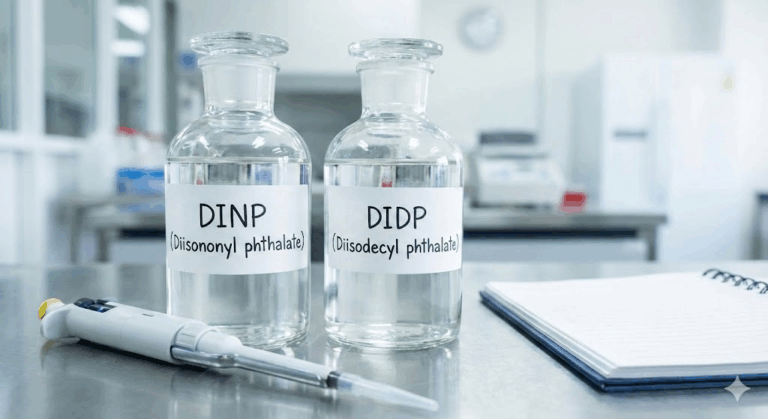
DINP and DIDP together control nearly one-third of the global plasticizer market. That’s a massive chunk of an industry worth billions. If you’re choosing between these two plasticizers for your PVC formulation, you’re making a decision that affects product performance,…
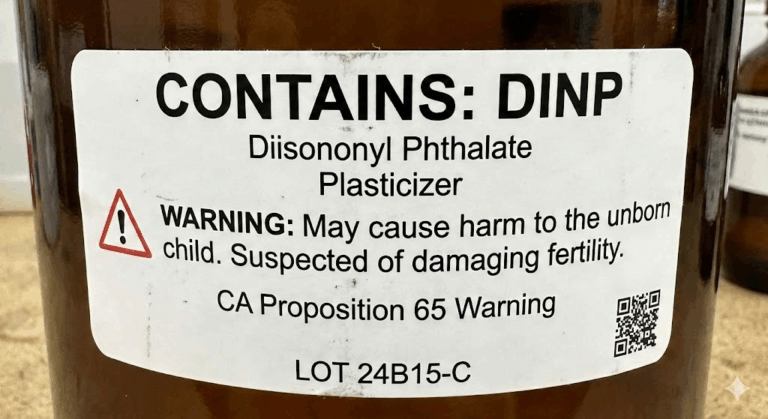
You identify phthalates in a product by reading the material declaration for the ester’s name, CAS number and concentration in each plasticized component, and you prove the answer with solvent-extraction GC-MS on that component when a limit applies. No handheld…
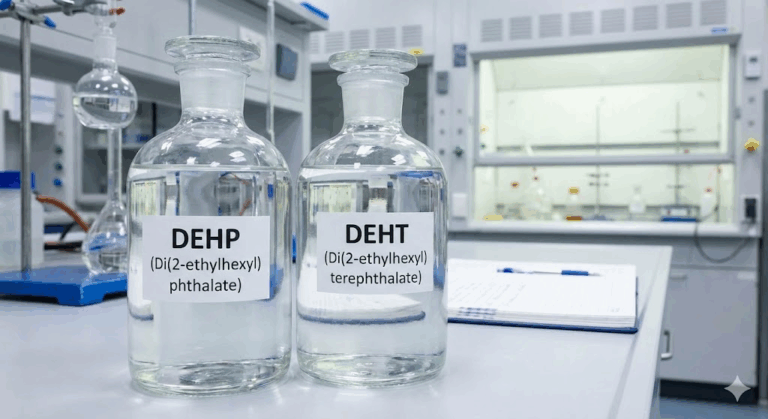
Regulatory bodies across the EU, California, and beyond are phasing out DEHP—the most common plasticizer in flexible PVC products—due to its reproductive and endocrine-disrupting properties. For manufacturers, procurement professionals, and engineers, this shift creates an urgent question: What makes DEHT…
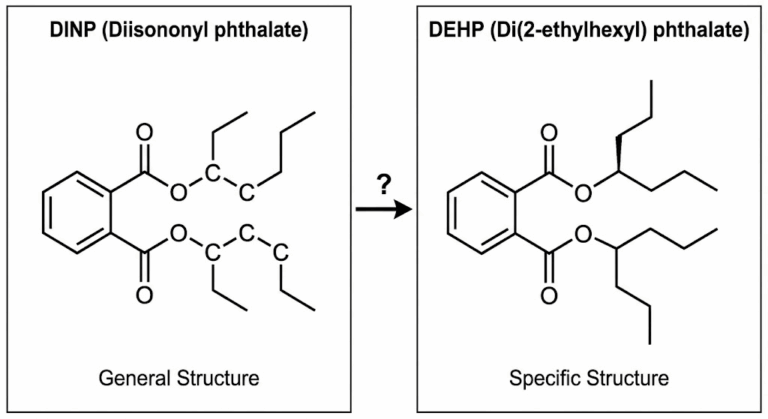
Choosing the right plasticizer for your PVC applications determines whether your products will meet regulations, perform reliably, and remain cost-competitive. DINP and DEHP are the two most prevalent phthalate plasticizers in manufacturing today, but they’re not interchangeable—each comes with distinct…
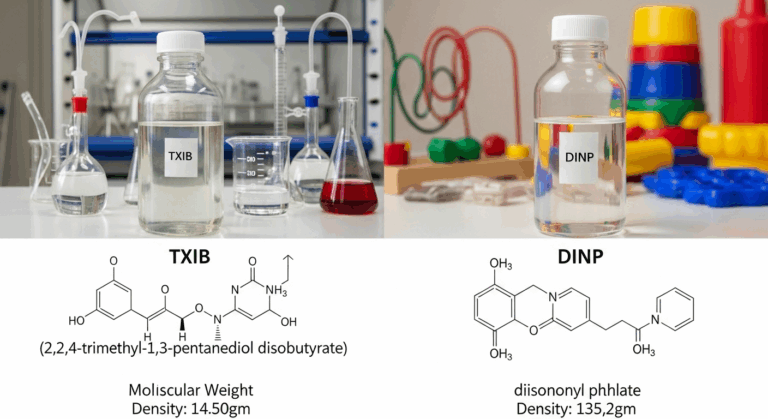
DINP is a general-purpose phthalate plasticizer that can make up the whole plasticizer loading of a flexible formulation, and TXIB is a low-viscosity non-phthalate additive that replaces a few phr of the primary plasticizer to thin a plastisol. In the…

DPHP (Di(2-propylheptyl) phthalate) is a high-performance plasticizer that makes rigid plastics like PVC flexible, durable, and heat-resistant. It’s essentially a clear, oily liquid chemical additive that manufacturers mix into plastics at levels of 30-60% by weight to transform hard, brittle…

A compounder picking up a legacy formulation that lists DIBP — the DIBP chemical commonly written as di-iso-butyl phthalate or di iso butyl phthalate — has three questions to answer before the next batch runs: Is the dibp phthalate ester…

Dibutyl Phthalate (DBP) is a synthetic chemical that’s been used for decades to make plastic products flexible and durable. It’s an oily, colorless liquid that manufacturers add to rigid plastics like PVC to transform them into bendable materials you encounter…