

That PVC conduit cut you’re about to make affects every wire that will ever pass through it. A jagged edge or rough burr left behind can nick wire insulation during pulling, creating potential electrical hazards down the line.
Most DIY guides treat conduit like plumbing pipe. They’re not the same. Conduit demands a smooth interior finish because electrical wires will slide against those cut edges for decades. The right tool, proper cutting conditions, and thorough deburring make the difference between a professional installation and a future problem.
What Tools Can You Use to Cut PVC Conduit?
Four main tools work well for cutting PVC conduit, each suited to different situations.
Ratcheting PVC Cutter – The cleanest cuts with the least effort. These cutters handle conduit up to 2 inches in diameter and cost only $10-20. The catch? Hand fatigue becomes a problem after about 10 cuts. If your project is larger, switch to a different tool.
Hacksaw – The versatile workhorse most people already own. A hacksaw cuts any diameter conduit and works in tight spaces. Use a blade with 18-24 teeth per inch (TPI) to minimize cracking and splintering. Hacksaws leave burrs that require cleanup, but they never fatigue your hand like ratcheting cutters.
Miter Saw – Overkill for most DIY projects, but unbeatable for large jobs. A miter saw delivers perfectly square cuts at high speed. The downside: significant cost, lack of portability, and the need to clamp each piece.
Copper Tubing Cutter – A specialized tool with one specific purpose: cutting conduit when wires are already installed inside. More on this scenario later.

Which Tool Should You Choose?
For most DIY electrical projects, the ratcheting PVC cutter is the right choice. It’s inexpensive, portable, and produces cuts clean enough to minimize deburring work.
| Project Size | Conduit Diameter | Best Tool |
|---|---|---|
| Under 10 cuts | 2″ or smaller | Ratcheting PVC cutter |
| 10+ cuts | Any size | Hacksaw (18-24 TPI blade) |
| Production work | Any size | Miter saw |
| Wires already inside | Any size | Copper tubing cutter |
Switch to a hacksaw once you pass 10 cuts or if you’re working with larger diameter conduit. Your hands will thank you.
How Do You Cut PVC Conduit Step by Step?
Follow these four steps for clean, straight cuts every time.
1. Measure and Mark
Measure twice. Mark the cut line clearly using a permanent marker or pencil. For a perfectly straight guide, wrap painter’s tape or electrical tape around the conduit at your mark. When the tape edges align all the way around, you know the line is square.

2. Secure the Conduit
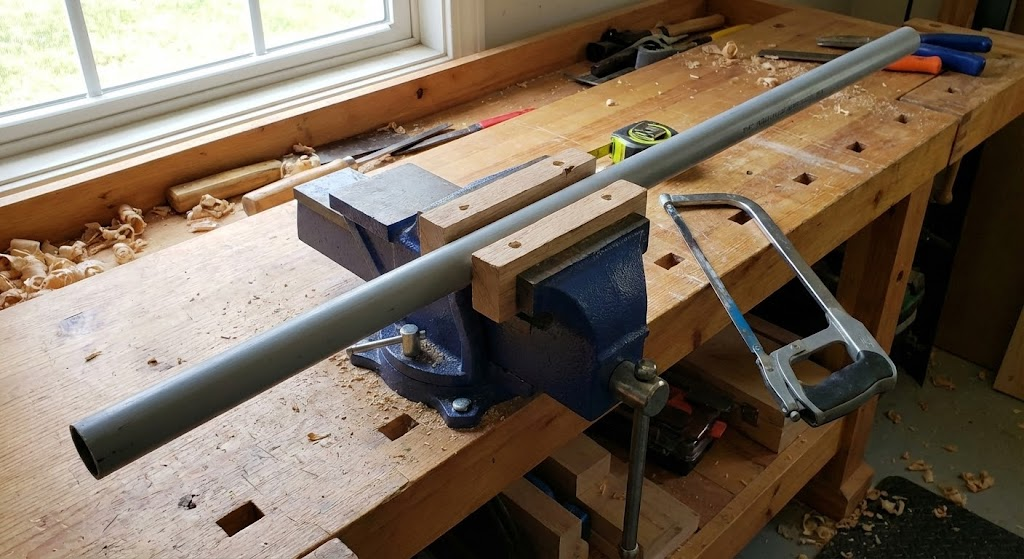
Never cut freehand. Unsecured conduit shifts during cutting, producing crooked cuts and potential injury. Options include:
- A vise or pipe clamp
- V-blocks on a workbench
- A helper holding the conduit steady
- Your foot, if working on the ground (wear sturdy boots)
3. Make the Cut
For a ratcheting cutter: Position the blade on your mark and squeeze the handle in a steady rhythm. Let the ratchet mechanism do the work.
For a hacksaw: Start with light pressure until the blade establishes a groove. Then use long, smooth strokes. Avoid pressing hard – excessive pressure causes cracking, especially in cold conditions.
4. Deburr Both Edges
This step is not optional for conduit. Remove burrs from both the inside and outside edges before installation. The next section explains why this matters so much.
Why Is Deburring Critical for PVC Conduit?
Sharp edges from cutting will damage wire insulation during pulling. As conductors slide through the conduit, they rub against the inside walls and any rough spots at joints. A single sharp burr can nick the insulation, creating a weak point that may eventually cause arcs, sparks, or shorts.
Deburring is not cosmetic. It’s a safety requirement.
Use any of these tools to remove burrs:
- Dedicated deburring tool (best results)
- Round file
- Utility knife (careful with the blade angle)
- Pair of pliers to snap off larger burrs
The quality check that professionals use: Run your fingers along the reamed edges. You’ll feel any remaining bits of plastic that need removal. The edge should feel completely smooth in every direction.
Schedule 80 conduit, with its thicker walls, may require additional interior edge beveling. A step drill bit (unibit) works well for this.
Can You Cut PVC Conduit in Cold Weather?
Below 50 degrees Fahrenheit, PVC becomes brittle. A dull blade in cold conditions will crack the pipe instead of cutting it cleanly.
Standard PVC grows very brittle below 20 degrees Fahrenheit. At that point, even careful cutting becomes risky.
Cold weather cutting guidelines:
- Avoid ratcheting PVC cutters in cold weather. The compression force can crack brittle PVC.
- Use a fine-tooth saw blade (16-18 TPI) instead.
- Keep blades sharp – dull teeth are the primary cause of cold-weather cracking.
- If possible, bring conduit indoors to warm to room temperature before cutting.
- Inspect every cut end for cracks afterward. If you find any, recut the pipe at least 2 inches beyond the visible damage.
The cold weather threshold is clear: above 50F, use your preferred tool. Below 50F, switch to a sharp hacksaw and cut carefully.
How Do You Cut Conduit With Wires Already Inside?
Sometimes you need to shorten a conduit run that already has wires pulled through it. Pulling those wires back out, recutting, and repulling wastes time and risks wire damage. Several methods let you cut the conduit without harming the wires inside.
Copper Tubing Cutter Method (Recommended)
This approach produces the cleanest results with the least risk to wires. Position the tubing cutter around the conduit and tighten just enough to score the surface. Rotate the cutter around the pipe, tightening slightly after each rotation. After only a few rotations, it cuts cleanly through without any damage to the wires. A flat-blade screwdriver quickly removes the small interior ridge left behind.
Score and Snap Method
For conduit 1-1/2 inches or smaller, use a ratcheting cutter to deeply score the outer surface without cutting all the way through. Then snap the conduit at the scored line. The break follows the score, keeping the cut clean.
What NOT to Do: Mason’s Line
You may read suggestions to use mason’s string or nylon cord as a friction saw. While this cuts through PVC quickly, it damages the wires inside. Mason’s string will cut through the sheathing of most cables. THHN wire insulation cannot survive a nylon string saw.
Avoid this method entirely when wires are present.
Protective Sleeve Method
For larger conduit where a tubing cutter won’t fit, slide a smaller diameter conduit section over the wires inside the pipe. This creates a protective barrier while you cut with a reciprocating saw or hacksaw.
What Are Common Mistakes to Avoid?
Most PVC conduit cutting failures trace back to a few repeated errors.
Dull blades cause more problems than any other factor. A dull hacksaw blade or worn ratcheting cutter blade tears instead of cuts, producing jagged edges that require extensive cleanup. Replace blades regularly.
Skipping deburring seems like a time-saver until you’re pulling wire. The few minutes saved will cost hours of troubleshooting if damaged insulation causes electrical issues later.
Cutting in cold weather without adjustments guarantees cracked conduit. Switch from compression-style cutters to a fine-tooth saw when temperatures drop below 50F.
Unsecured conduit shifts during cutting, producing crooked cuts that won’t seat properly in fittings. Always stabilize the pipe before cutting.
Wrong saw blade matters more than most people realize. Wood-cutting blades with large teeth chip PVC. Stick to fine-tooth blades with 18+ teeth per inch.
Excessive hacksaw pressure works against you. Let the blade teeth do the cutting. Pushing too hard can crack the conduit, especially in cold conditions.
What’s Next?
The cut is where wire protection begins. Every conduit joint in your installation starts with how well you cut and deburred that pipe.
With your conduit cut and properly finished, you’re ready to make secure connections. Practice your technique on scrap pieces first if you’re new to the process.