

A flexible-PVC compounder needs more than the marketing line of “high compatibility, low volatility.” They need viscosity at 20 °C with the test method, vapor pressure with the inhalation context, and the migration behavior that predicts cable performance. The property profile of DOP, end to end, is below.
DOP Molecular Structure and Chemical Identity
DOP is bis(2-ethylhexyl) phthalate, CAS 117-81-7, with molecular formula C24H38O4 and molecular weight 390.56 g/mol. The IUPAC name is bis(2-ethylhexyl) benzene-1,2-dicarboxylate.
The molecule is a phthalic-acid backbone esterified with two branched 2-ethylhexyl arms. The branching prevents the alkyl chains from packing tightly, which keeps the plasticized PVC matrix mobile down to about -30 °C. The polar phthalate ester groups anchor the molecule in the polar-amorphous regions of PVC at processing temperature; PVC compatibility comes directly from this structure.
A procurement note worth pinning: the DOP label is ambiguous. Strictly, dioctyl phthalate could mean either bis(2-ethylhexyl) phthalate (CAS 117-81-7, branched C8, what suppliers actually ship) or di-n-octyl phthalate (CAS 117-84-0, linear C8, rarely produced commercially). NOAA’s CAMEO Chemicals hazmat sheet lists 117-84-0 — the wrong CAS for the commercial product. Always verify CAS 117-81-7 on the supplier’s certificate of analysis.
DOP Physical Constants and Spec Sheet
The DOP physical-constant table is best read as a procurement spec line — value, unit, and ASTM or JIS method together. The numbers cross-verify across Hanwha and Eastman manufacturer datasheets, OSHA chemical-sampling data, NOAA CAMEO, and the Wikipedia DEHP infobox.
| Property | Typical value | Method |
|---|---|---|
| Specific gravity (20 °C) | 0.985 ± 0.003 | JIS K-6751 |
| Dynamic viscosity (20 °C) | 77-82 mPa·s | ASTM D445 |
| Boiling point (1 atm) | 384-386 °C | distillation |
| Flash point (closed cup) | 212 °C | Setaflash CC |
| Vapor pressure (20 °C) | <0.013 to <1.33 Pa | (method-dependent — see note) |
| Refractive index (nD25) | 1.485 ± 0.003 | JIS K-6751 |
| Acid value | ≤0.04 mg KOH/g | JIS K-6751 |
| Purity | ≥99.5% | GC |
| Volatility | ≤0.1 wt% | JIS K-6751 |
| Freezing point | ~-50 °C | — |
| Water solubility (25 °C) | ~0.3 ppm | NIOSH |
| Dielectric constant (60 Hz) | ~5.2 | ASTM D150 |
One subtle trap on vapor pressure: Eastman’s TDS publishes <0.0001 torr (<0.013 Pa) at 20 °C, while NIOSH cites <0.01 mmHg (<1.33 Pa). The 100× spread traces to limit-of-detection differences in the measurement methods. For worker-inhalation exposure assessment, use the higher published bound rather than the manufacturer-TDS lower bound.
The dielectric constant (~5.2 at 60 Hz) is high for a plasticizer because of the polar phthalate ester. That polarity is why DOP-plasticized PVC works for general-purpose flexible-PVC applications but loses to lower-polarity DOTP and TOTM at higher frequencies and service voltages.
DOP Thermal Behavior
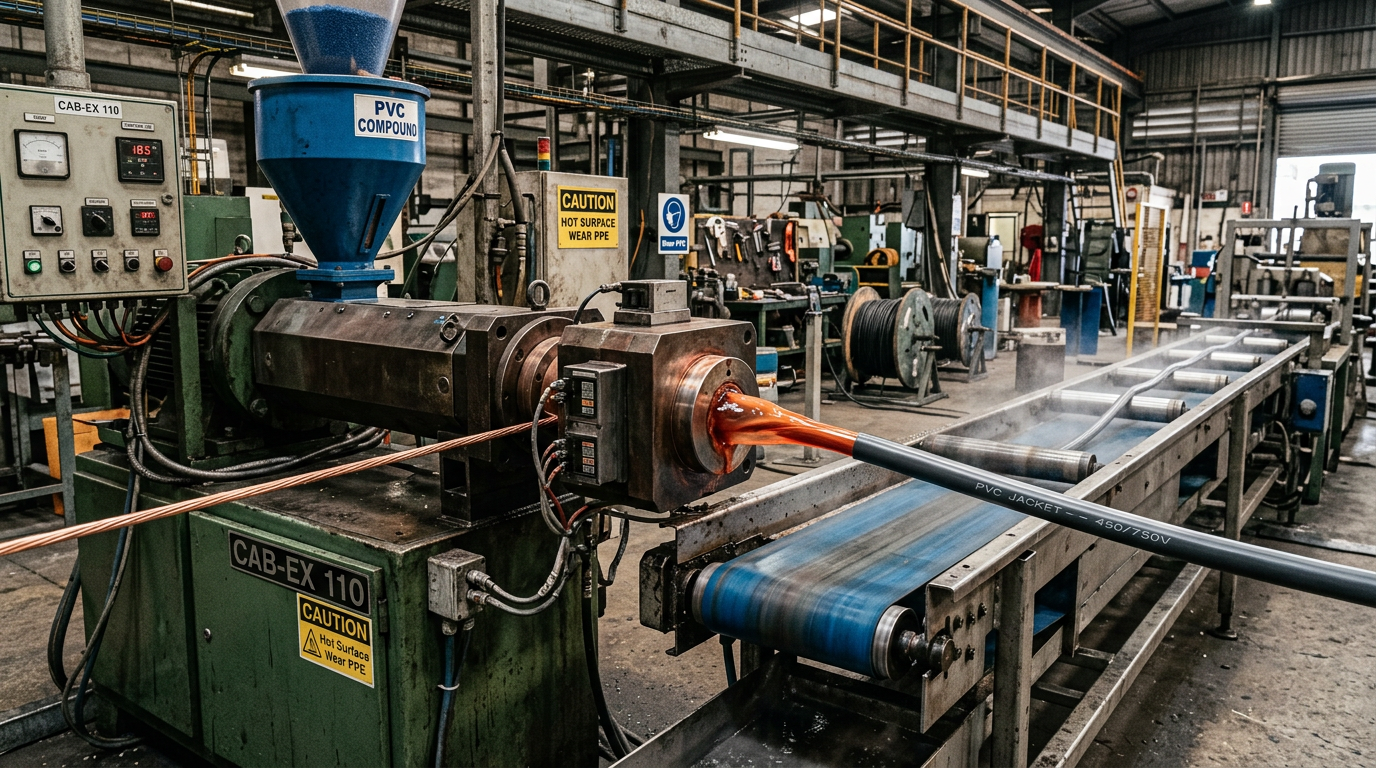
DOP’s thermal effect in a PVC compound is governed by three numbers: the glass transition temperature (Tg) it suppresses, the brittle point of the resulting compound, and the volatility loss under processing heat. Pure PVC has a Tg around 80 °C; loading 50 phr of DOP brings the compound’s Tg down to roughly -20 to -30 °C, which is what makes flexible PVC flexible. Below the brittle point, DOP-plasticized cable jacket cracks under impact; for service down to -40 °C, a low-temperature plasticizer such as DOA carries the formulation, not DOP alone.
Volatility under processing temperature follows the ASTM D1203 activated-carbon method. Industrial-grade DOP loses roughly 1-3 wt% at 100 °C over 24 hours on a fresh PVC sheet. The shorter C8 2-ethylhexyl arm explains the relative position: longer branched C9 / C10 ester chains found in DINP, DIDP, and DPHP all volatilize less at 100 °C than DOP.
DOP Chemical Stability and Migration
DOP is hydrolytically stable in neutral storage. Hanwha specifies “almost unlimited shelf life” in closed containers below 40 °C with humidity excluded, and the substance is non-reactive in PVC processing windows up to ~190 °C.
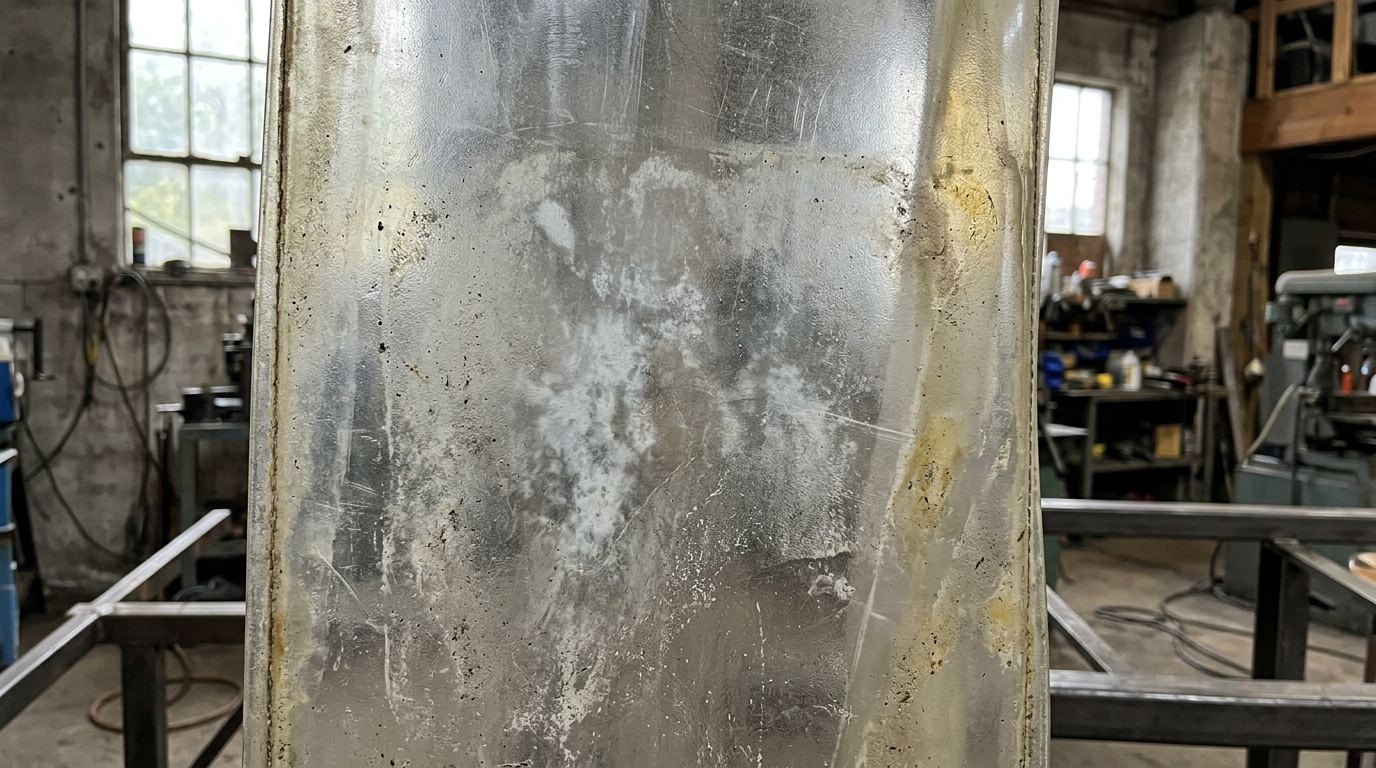
The two failure modes that matter in service are migration to a contacting phase and slow ester hydrolysis under acidic or alkaline conditions. Migration follows ASTM D1239 and the EU food-contact battery (EU 10/2011 simulants A, B, C, D1, D2). DOP is fully compatible with PVC at loadings up to roughly 150 phr; past that the compound exudes the plasticizer to the surface — the “blooming” seen on aged shower curtains and old vinyl flooring. Migration to polyolefins is non-trivial: a flexible PVC gasket against a polyethylene container progressively transfers DOP into the polyethylene, which is one reason food-grade flexible packaging has shifted to DOTP and citrate-ester plasticizers.
Where DOP Properties Actually Decide
The most common mistake compounders make with DOP is reading the property values without their methods. Vapor pressure at <0.0001 torr is a manufacturer-typical lower bound; <0.01 mmHg is a NIOSH-anchored upper bound. Both describe the same molecule, and any regulatory dossier needs the higher one. Density 0.985 g/cm³ at 20 °C per JIS K-6751 is a procurement-spec line; density "around 0.99" without method is not.
Check CAS 117-81-7 on the next certificate of analysis. Request the JIS K-6751 / ASTM D445 method numbers behind every spec value. Then compare the property profile against your target service environment before the formulation enters the trial line.