

·Introduction to PVC
Polyvinyl chloride (PVC) is one of the five main general-purpose plastics and ranks third in global production among thermoplastics, following polyethylene (PE) and polypropylene (PP).
While PVC has an amorphous structure, lacks a fixed melting point and has limited light and heat stability, it offers excellent mechanical properties, good insulation, flame retardancy, and strong cost-performance characteristics, making it versatile for various applications.
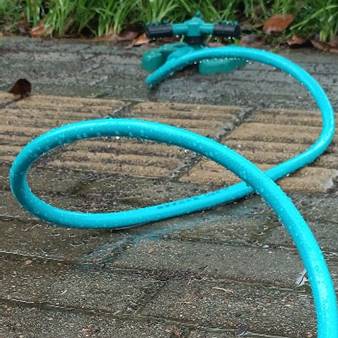
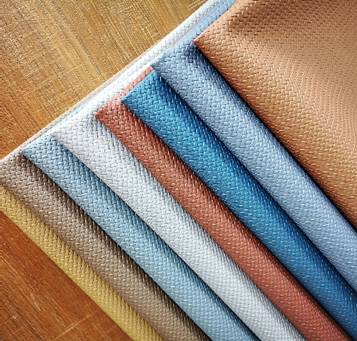
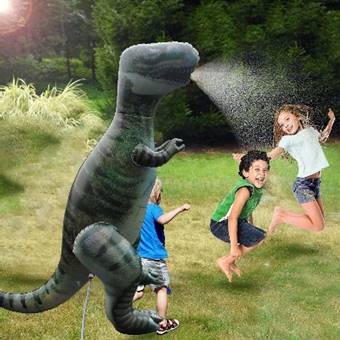
·Types of PVC
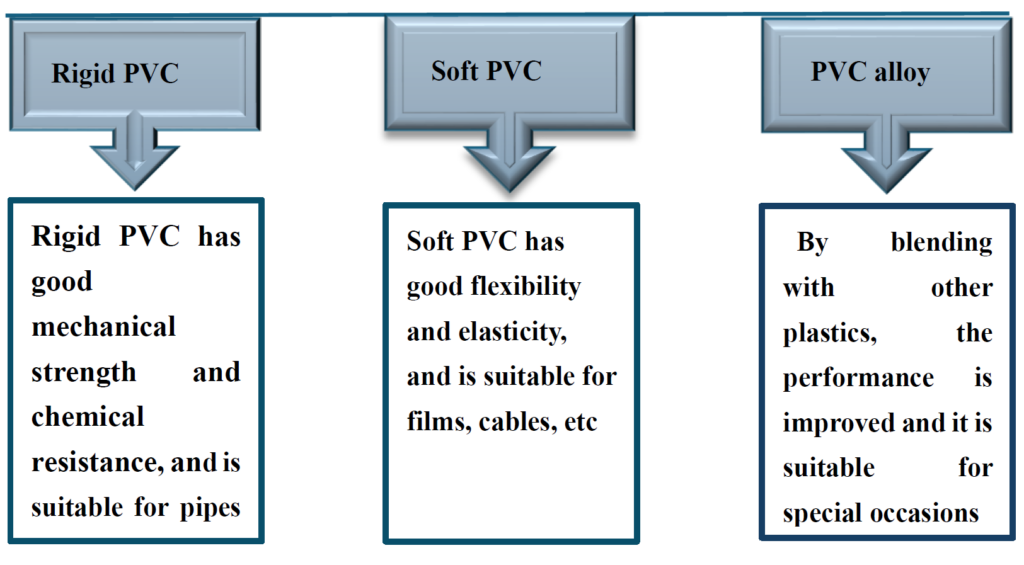
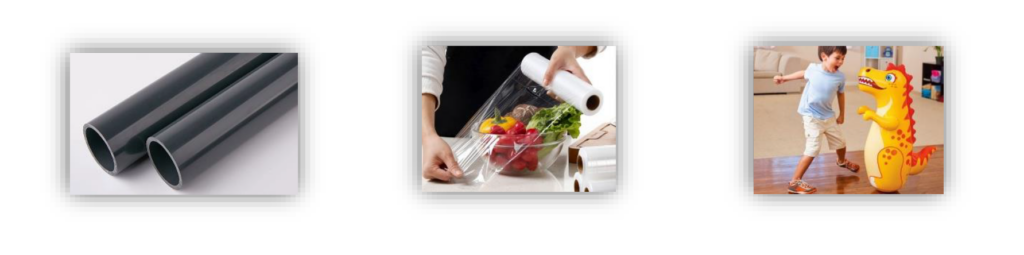
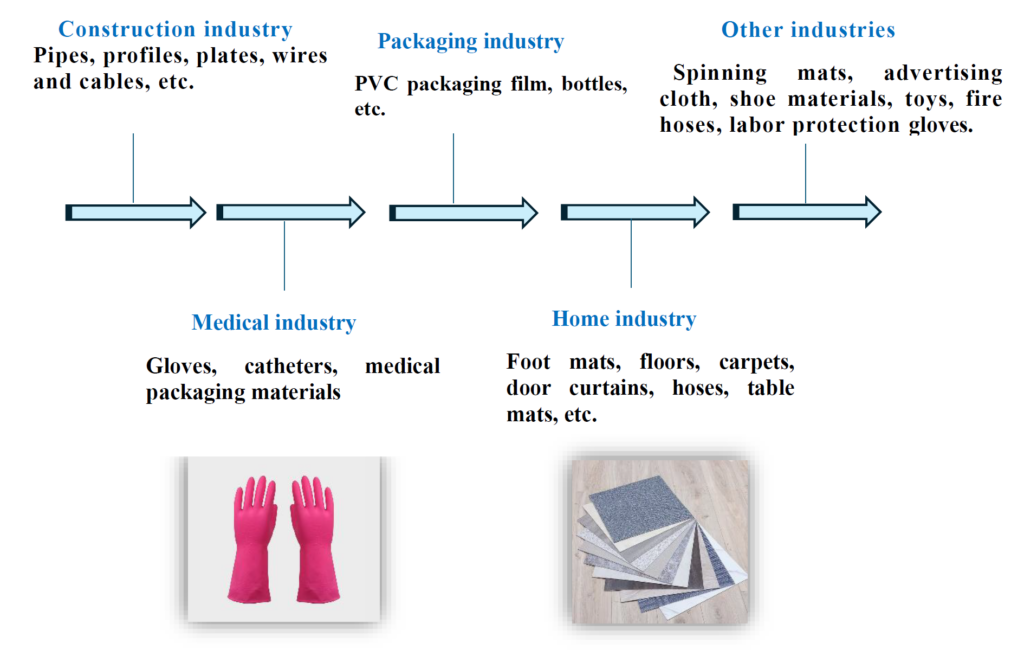
PVC applications
·Formula analysis–selection of PVC resin
- According to the polymerization method
There are three main types of PVC resin: suspension PVC resin, bulk PVC resin, and emulsion PVC resin. Among these, suspension PVC resin is the most frequently chosen option. Emulsion PVC paste, on the other hand, is primarily utilized in applications such as artificial leather, wallpaper, and flooring materials.
- According to the type of dispersant
Two types: loose type (XS) and compact type (XJ). Currently, loose type is more commonly used.
- According to toxicity
PVC can be categorized based on its toxicity into two distinct grades: ordinary grade, which is classified as toxic , and sanitary grade, recognized as non-toxic. The sanitary grade is required to maintain a vinyl chloride (VC) content of less than 10 x 10^-6, thereby rendering it suitable for applications in food and medicinal products.
- According to molecular weight
PVC is classified according to its molecular weight into eight types, designated SG1 through SG8. In this classification system, a lower designation signifies a higher degree of polymerization, resulting in increased molecular weight and strength. However, this correlation also leads to greater challenges in melt flow and processing of the material.
Formula Analysis: Selecting the Plasticizer
Resin grade sets the backbone; the plasticizer decides whether the compound behaves like a rigid profile or a soft cable jacket. Selection runs on four questions, in this order.
- How soft, and measured how. Shore A or D at a stated loading is the contract. Efficiency differs between esters, so the phr that hits 75 Shore A with DOP is not the phr that hits it with DINP or DOTP, and comparing grades on phr alone hides a cost difference.
- How long it has to stay soft. A part that runs warm, sits in a stream of air, or contacts another polymer loses plasticizer over time. High-molecular-weight and polymeric grades resist that; low-molecular-weight esters do not. This is where wire and cable, flooring and automotive interiors diverge from packaging film.
- What temperature it sees at the cold end. Cold-flex behaviour per ASTM D1043 is where adipates such as DOA and DINA pull ahead of the general-purpose phthalates. A compound that passes at room temperature can crack at minus 20 °C.
- Which regulation applies. Food contact, toy safety and medical device work each restrict a different subset. REACH Annex XVII, FDA 21 CFR and 16 CFR 1307 decide the shortlist before performance does, which is why the non-phthalate grades such as DOTP, DINCH, ATBC and citrates dominate those applications.
Stabiliser choice pairs with this rather than following it: a Ca-Zn system and a plasticizer are selected together, because the stabiliser has to survive the same processing window the plasticizer sets.