

You’re standing in the toy aisle, trying to pick a bath toy for your toddler. The plastic duck feels soft and squeezable. But should you worry about what’s inside that plastic?
Here’s a startling fact: A 2005-2006 study by the National Health and Nutrition Examination Survey found DINP metabolites in 95.2% of Americans’ urine samples. That’s nearly everyone. This chemical is everywhere—in our homes, our cars, our children’s toys.
But you can protect yourself and your family. Learning to spot DINP gives you the power to make safer choices every time you shop.
Let me show you exactly how to do this.
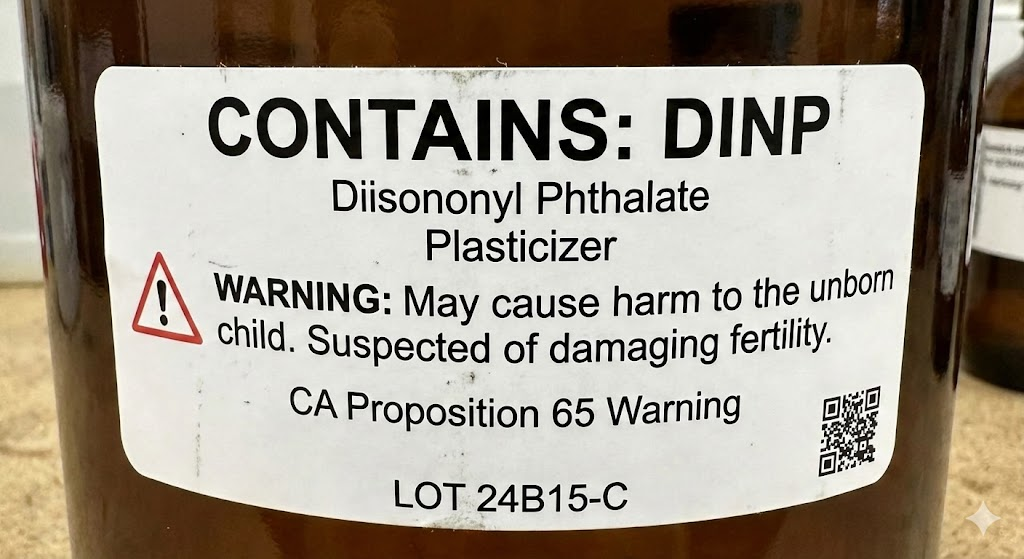
How Can You Identify DINP on Product Labels?
Step 1: Check the Ingredient List
Flip the product over and scan the ingredient list for these acronyms: DINP, BBP, DEP, DBP, DEHP, DiDP, or DnOP. Sometimes you’ll see the full chemical name “diisononyl phthalate” spelled out.
But here’s the catch: most products won’t list phthalates at all.
Manufacturers aren’t legally required to disclose phthalates on many product labels. The FDA confirmed that you often can’t determine from a label whether phthalates are present in a product’s fragrance or flavor.
When you do spot these acronyms, put the product back on the shelf. Those three or four-letter codes tell you exactly what you’re looking for.
Step 2: Identify the Recycling Code
Turn the plastic product over and look for the triangular recycling symbol. Check the number inside that triangle.
If you see a “3” inside the triangle, that’s your red flag.
Look underneath the symbol for the letters “V” or “PVC.” These abbreviations stand for polyvinyl chloride—the type of plastic that almost always contains phthalate plasticizers like DINP.
You’ll usually find this symbol on the bottom of containers, the back of toys, or molded into plastic products. Take a few seconds to check. This simple step can save you from bringing DINP into your home.
Step 3: Watch for “Fragrance” or “Parfum”
Scan the ingredient list for two sneaky words: “fragrance” or “parfum.”
These innocent-looking terms hide a major loophole. Phthalates often lurk in proprietary scent formulations, and companies don’t have to tell you they’re there. Harvard T.H. Chan School of Public Health experts confirm that cosmetic companies aren’t required to disclose whether their products contain phthalates.
The fragrance industry considers scent recipes trade secrets. If phthalates are part of that secret formula, they stay secret.
This affects more than perfume. You’ll find “fragrance” listed on personal care products, cosmetics, cleaning supplies, laundry detergents, and scented candles.
Your safest bet? Choose unscented products or those labeled “fragrance-free.”
Step 4: Look for Phthalate-Free Certifications
Some manufacturers proudly declare their products phthalate-free. Look for these specific labels and certifications:
“Phthalate-Free” claims: Some packaging states this directly. It’s the easiest way to know you’re safe.
EWG VERIFIED mark: Products carrying this certification meet strict health and transparency standards set by the Environmental Working Group. The EWG confirms these products don’t contain phthalates.
EPA Safer Choice: This label means the EPA has verified the product’s ingredients meet safer chemical standards.
Green Seal certification: Another third-party verification that screens out harmful chemicals including phthalates.
When you see these labels, you can buy with confidence.
Step 5: Research the Manufacturer
Sometimes labels don’t tell the whole story. That’s when you need to dig deeper.
Visit the manufacturer’s website and look for their ingredient policy or chemical safety commitments. Many brands now publish transparency reports listing chemicals they’ve banned from their products.
Use these free tools to check products before you buy:
EWG’s Skin Deep Database: Search personal care products by name. The database rates products based on ingredient safety and flags phthalate concerns.
Think Dirty app: Scan product barcodes with your phone. The app shows ingredient breakdowns and health ratings.
When you can’t find information online, contact the manufacturer directly. Call their customer service line or send an email asking whether their products contain DINP or other phthalates. Reputable companies will answer your questions.
What Are the Challenges in Identifying DINP?
Let me level with you: finding DINP in products is harder than it should be.
No Standardized Disclosure Requirements
Manufacturers aren’t legally required to list phthalates on all products. The rules vary by product type and industry.
Cosmetic companies don’t have to disclose phthalate content in their formulations. The ingredients are considered proprietary trade secrets. This means you’re shopping blind for many beauty and personal care products.
International products follow different rules. Items imported from other countries may not comply with U.S. labeling standards. That cute toy shipped from overseas? It might not tell you what’s inside.
The “Fragrance” Loophole
Here’s what drives me crazy: phthalates hide behind the single word “fragrance.”
Scent formulations get special protection as proprietary information. If phthalates help carry or preserve a product’s scent, manufacturers can list it simply as “fragrance” or “parfum.”
You can’t determine phthalate presence from the label alone. The Center for Science in the Public Interest confirms it’s nearly impossible for even knowledgeable consumers to identify which products contain ortho-phthalates, especially in personal care items.
This loophole affects thousands of products on store shelves right now.
Complex Chemical Names
Let’s be honest: “diisononyl phthalate” is a mouthful.
Even when manufacturers list phthalates, the long technical names and three-letter acronyms confuse most shoppers. You need chemistry knowledge to decode ingredient lists filled with terms like DEHP, BBP, and DiDP.
Product labels rarely state “contains phthalates” in plain English. Instead, you’re hunting for scientific nomenclature while standing in a crowded store aisle.
Limited Label Space
Small products have tiny labels. There’s barely room for required information, let alone comprehensive ingredient lists.
Travel-size cosmetics, small toys, and compact household items often provide minimal labeling. You’ll find a brand name and maybe a recycling code, but detailed ingredients? Not always.
Realistic Expectations
Consumer Reports and health experts agree: it’s nearly impossible to completely avoid bisphenols and phthalates in modern life.
But that’s okay. You don’t need perfection.
Focus on strategic reduction instead of complete elimination. Target the products your family uses most often—the ones you touch every day, the items your kids put in their mouths, the containers that hold your food.
Conclusion
DINP shows up in 95% of Americans’ bodies, but you’re not powerless against it.
You now know three simple ways to identify DINP before you buy: check labels for phthalate acronyms like DINP, BBP, and DEP; look for recycling code #3 marked with “V” or “PVC”; and avoid products listing “fragrance” or “parfum” in the ingredients.
Yes, labeling loopholes make complete avoidance impossible. Manufacturers hide phthalates in proprietary fragrance formulas. Small products carry minimal ingredient information. Some products don’t require phthalate disclosure at all.
But strategic reduction works.
Start with one product category. Maybe you swap out plastic food containers for glass this week. Next month, you replace your kids’ soft plastic toys with phthalate-free alternatives. Then you switch to fragrance-free personal care products.
Each change cuts your exposure. Each informed purchase protects your family’s health.