

DEHCH — bis(2-ethylhexyl) cyclohexane-1,4-dicarboxylate — lands at your facility with a Safety Data Sheet and not much else. Every online resource is either a product marketing page or a chemical database entry. None tells you how to actually receive it, where to store it, or what to do when 200 kg of it hits the warehouse floor.
If your facility already handles DOTP, you are closer than you think. DEHCH is essentially hydrogenated DOTP — the aromatic ring converted to a cyclohexane ring. The handling protocols overlap by about 80%, and the differences come down to viscosity, flash point, and drum residue behavior.
What to Check When DEHCH Arrives at Your Facility
Before accepting a shipment, inspect the container and verify the product matches your purchase specification. DEHCH typically ships in 200 kg steel drums or in bulk at approximately 16 metric tons per 20-foot container without pallets.
Visual and Document Inspection
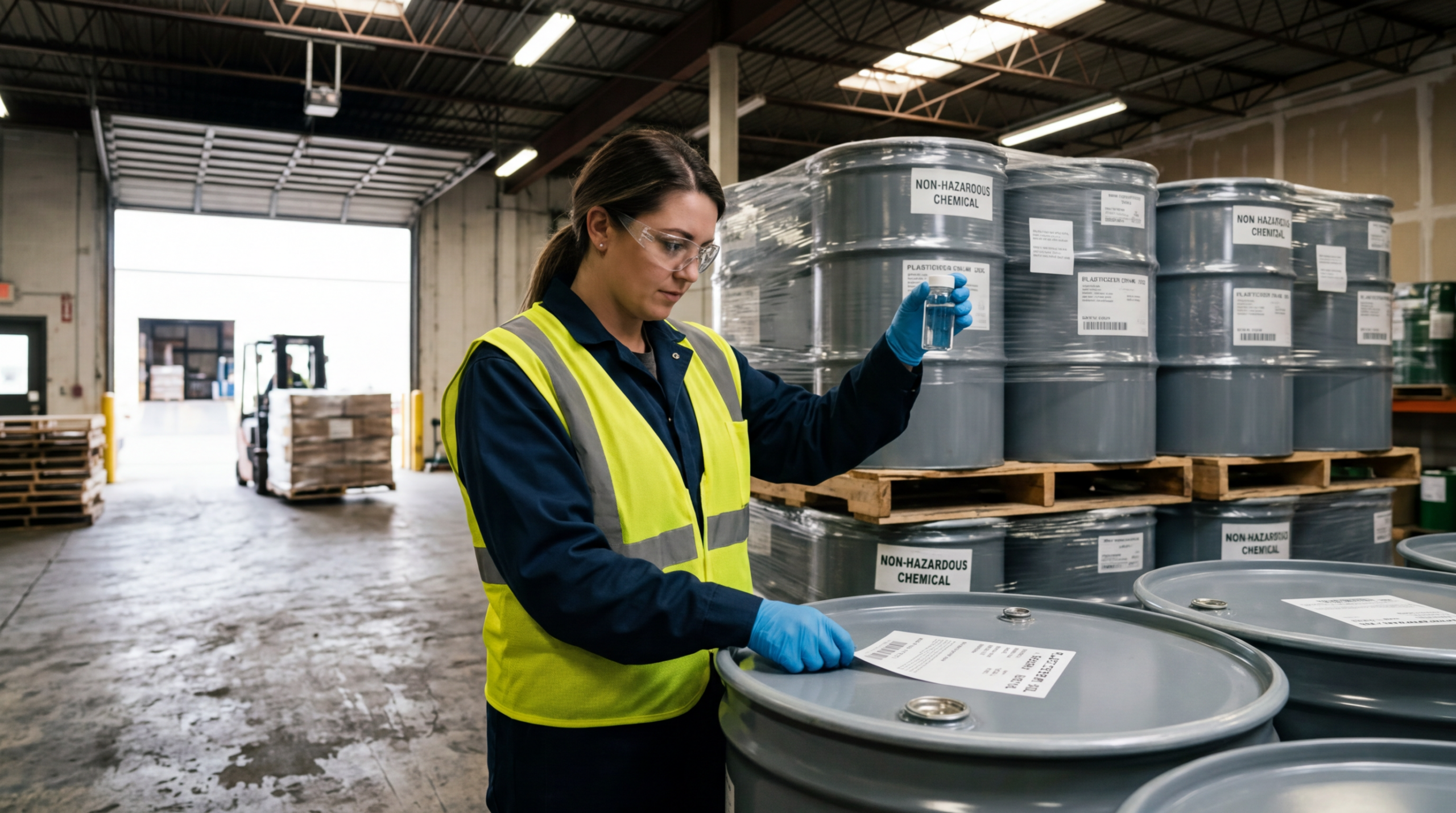
Check drums for dents, leaks, or damaged seals. Every drum label should show CAS 84731-70-4, and the lot number must match your Certificate of Analysis (CoA). Reject any drum with a broken or missing seal — contamination is the fastest way to ruin a batch downstream.
Pull a retention sample before unloading bulk deliveries. DEHCH should be a clear, nearly colorless liquid. A color reading above 20 APHA indicates contamination or degradation during transport.
Key QC Parameters
Cross-check the CoA against these acceptance criteria:
| Parameter | Specification | What It Tells You |
|---|---|---|
| Specific gravity (20C) | 0.956 +/- 0.003 | Product identity and purity |
| Acid value | 0.15 mg KOH/g max | Hydrolysis or contamination |
| Color | 20 APHA max | Degradation or impurities |
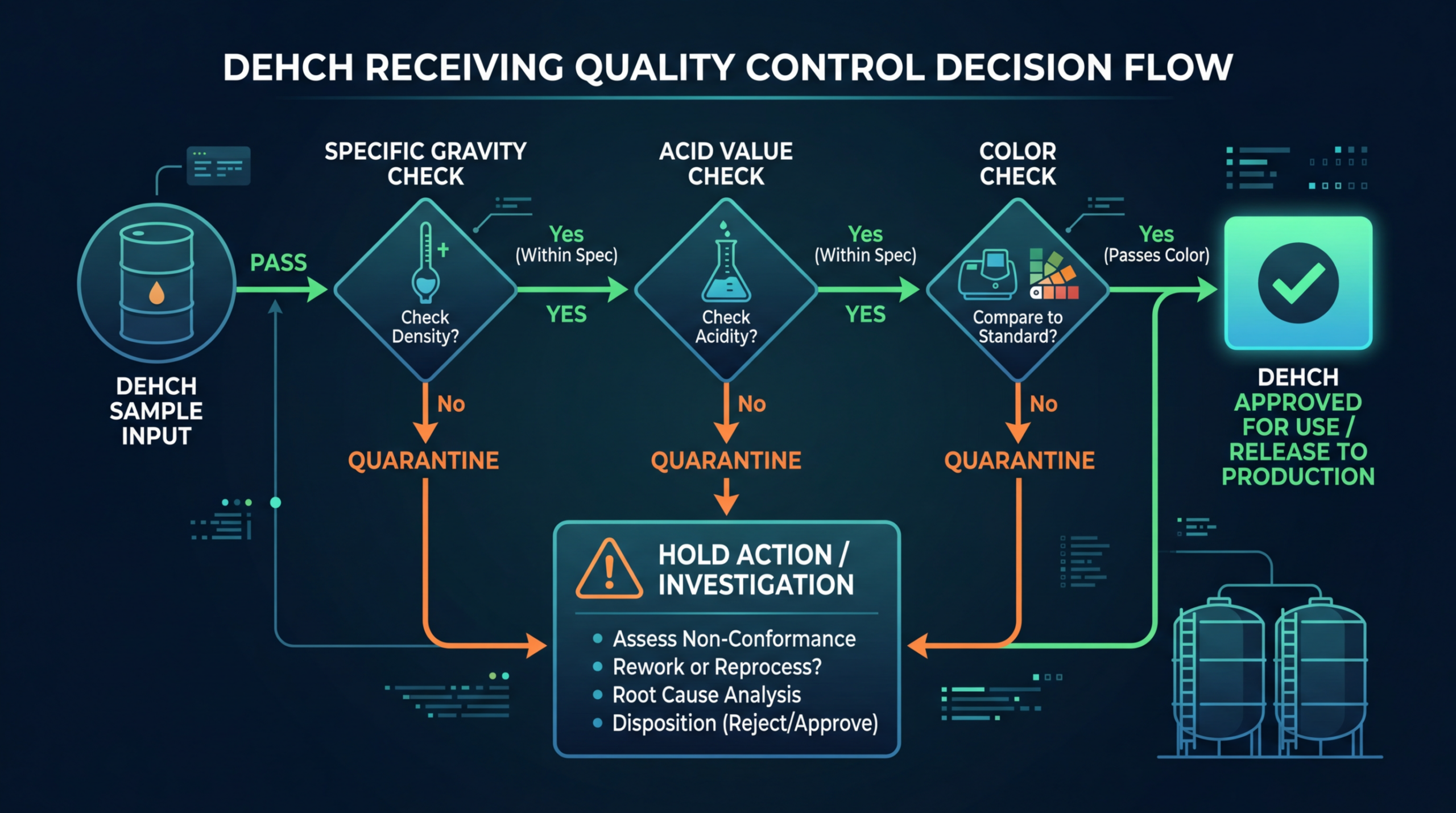
If the acid value exceeds specification, quarantine the shipment. Elevated acid value typically means moisture ingress during transport — and that moisture will cause problems in your formulation long before it affects the plasticizer itself.
Facilities already running DOTP handling protocols can use the same receiving inspection checklist with these adjusted spec ranges.
Storage Conditions and Facility Setup
DEHCH has a vapor pressure of 0.001 Pa at 50C — essentially zero volatility under any warehouse condition. The flash point is 190C, and EFSA testing confirmed thermostability up to 300C. That is a 100-150C safety margin above normal PVC processing temperatures, let alone storage temperatures.
Temperature and Environment
Store DEHCH between 10C and 40C. Below 10C, viscosity increases enough to slow pumping and metering. Above 40C is unnecessary risk for no benefit, though the plasticizer will not degrade.
Keep containers sealed and under cover. DEHCH is virtually insoluble in water (0.047 mg/L at 20C), but moisture on drum surfaces promotes corrosion of steel containers. Standard warehouse ventilation is sufficient — the extremely low vapor pressure means you will not accumulate vapors even in enclosed spaces.
Container Compatibility and Grounding
Carbon steel drums and stainless steel IBCs are standard. HDPE IBCs are also acceptable for smaller operations. Ground all metal containers and transfer equipment — DEHCH itself is a poor conductor, and static discharge during pumping is the primary ignition concern, not vapor accumulation.

Shelf Life Reality
You may encounter suppliers listing a “minimum 1 year shelf life.” That figure is a commercial warranty, not a chemical stability limit. Ester-type plasticizers like DEHCH do not undergo meaningful degradation under proper storage conditions. The degradation pathways — hydrolysis and oxidation — require moisture ingress or sustained high temperatures to initiate.
Practice FIFO inventory rotation, but do not discard properly stored DEHCH solely because it passed the one-year mark. Check acid value and color on older stock — if both are within specification, the material is perfectly usable.
Transfer and Handling Procedures
DEHCH has a dynamic viscosity of 30-45 mPa.s at 20C — roughly comparable to light machine oil. Standard gear pumps and diaphragm pumps handle it without difficulty at ambient temperature. In cold climates, expect viscosity to increase noticeably below 10C. Warming drums to 15-20C before transfer restores normal flow.
PPE Requirements
Under the EU CLP regulation (EC 1272/2008), DEHCH is classified as “Not Classified” — it does not meet criteria for any GHS hazard category based on substance-specific toxicological testing. EFSA’s 2020 assessment found no genotoxic potential and no toxicologically relevant effects in 90-day animal studies.
One caution: some chemical databases assign DEHCH a GHS07 Warning classification with H302, H315, H319, and H335 hazard statements. These entries are generated from structural analog prediction algorithms, not from actual DEHCH test data. The ECHA REACH registration confirms “Not Classified.” Always use your supplier’s SDS as the authoritative source — not a generic database lookup.
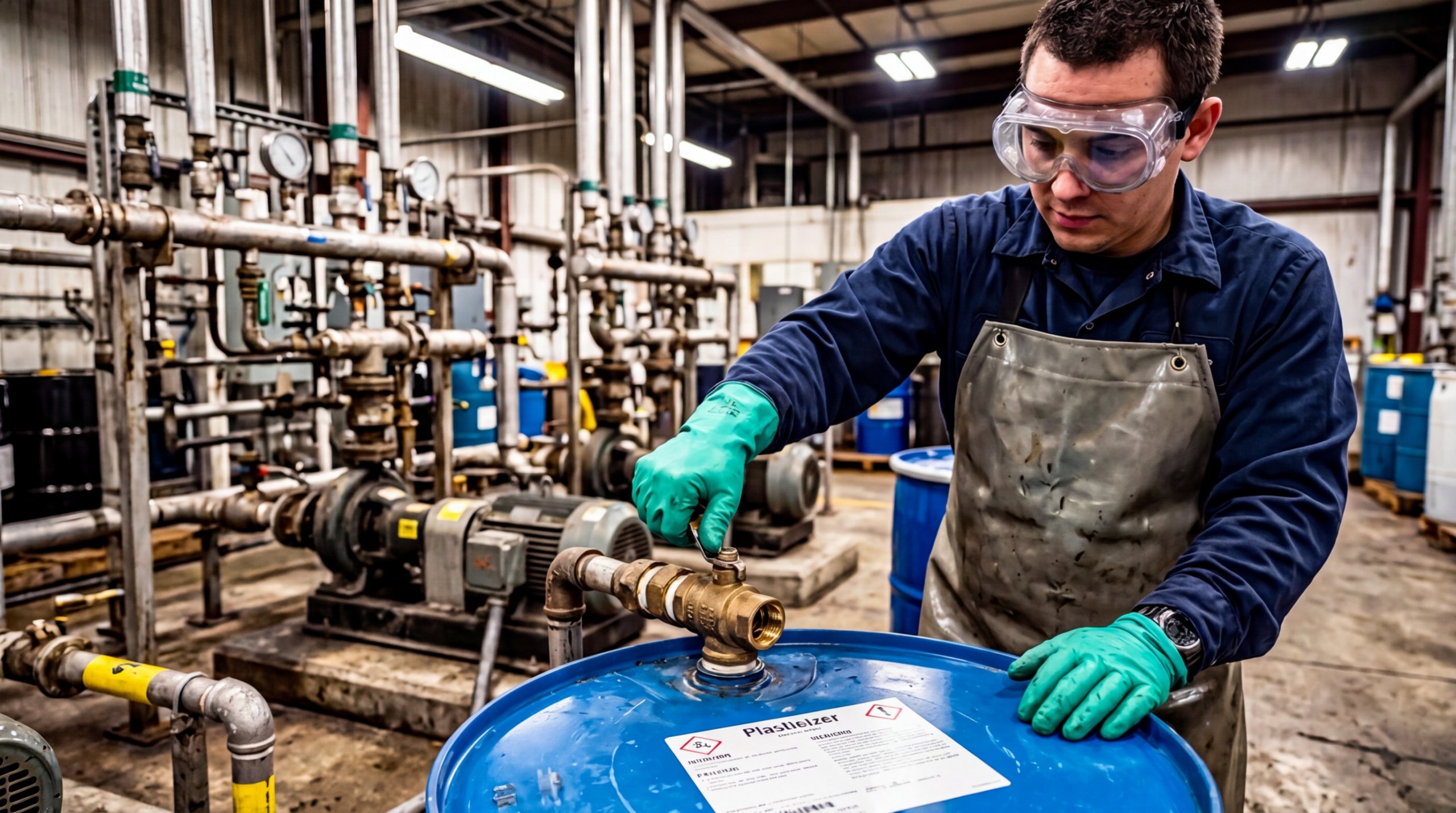
“Not Classified” does not mean “handle bare-handed.” Standard chemical hygiene still applies:
- Chemical-resistant gloves (nitrile, minimum 0.4 mm thickness)
- Safety goggles for transfer operations where splashing is possible
- Lab coat or chemical-resistant apron
- In enclosed spaces with heated DEHCH, use local exhaust ventilation
DEHCH is highly lipophilic (LogP 8.84). Skin contact leaves an oily film that soap and water alone will not fully remove. Use an industrial degreaser for cleanup after contact.
What Your DEHCH Data Sheet Does Not Tell You
The SDS gives you hazard classification, first aid measures, and physical properties. It does not cover what actually matters on the production floor.
Pumping Behavior at Different Temperatures
The published viscosity of 30-45 mPa.s applies at 20C. A drum that sat in an unheated warehouse at 5C overnight pumps noticeably slower than one at room temperature. Warm cold drums to at least 15C before metering — not because DEHCH will not flow, but because your metering accuracy depends on consistent viscosity. A 10C temperature swing can shift your actual phr by enough to affect fusion behavior downstream.
Drum Residue and Changeover
When switching from DOTP to DEHCH, flush your transfer lines, hoses, and holding tanks. DEHCH and DOTP are mutually compatible, but even 2-3% DOTP contamination changes the gelation profile. If you notice faster gelation than expected after a changeover, residual DOTP in the lines is the first thing to check.
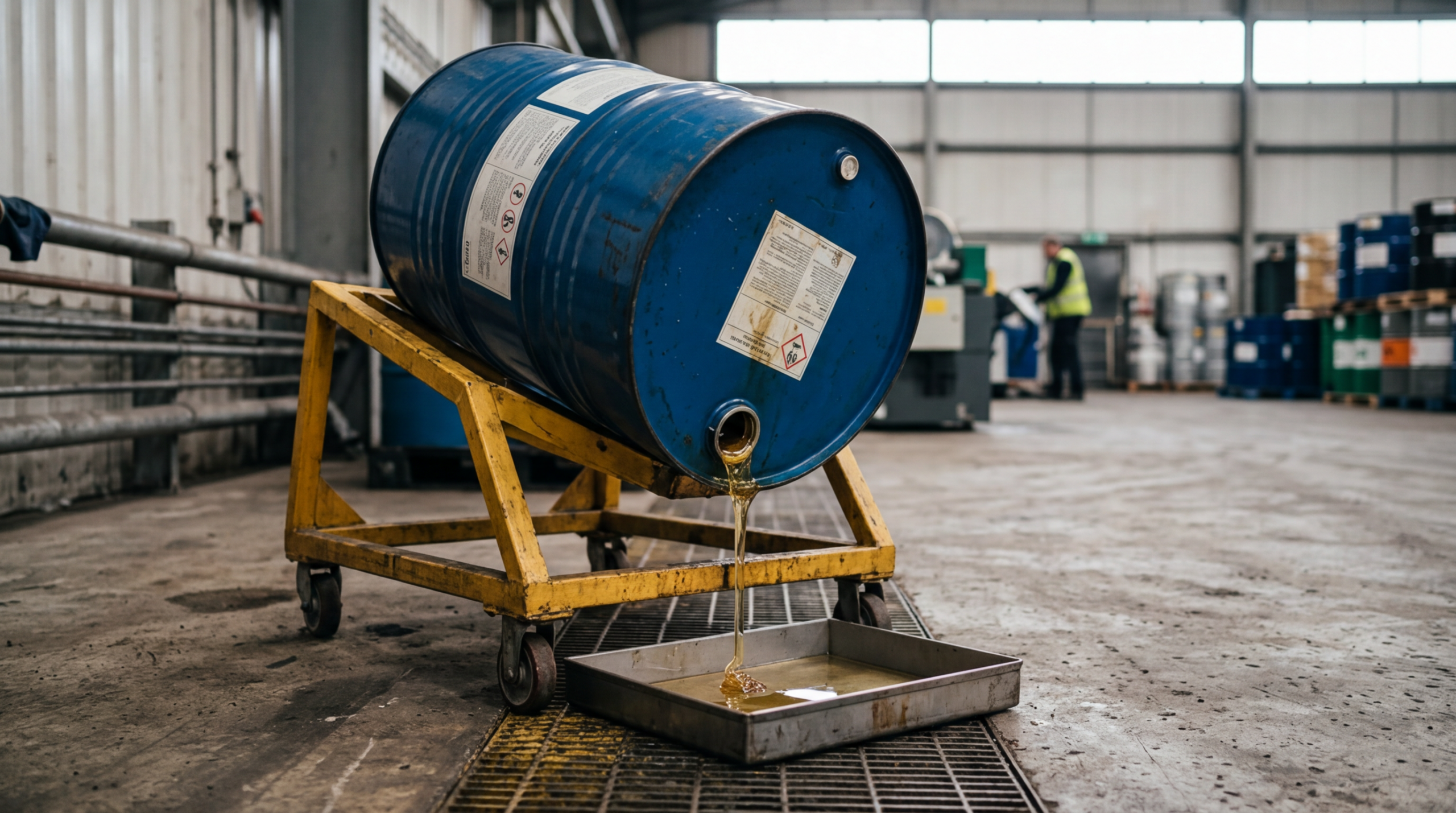
Drain drums fully. DEHCH clings to steel drum walls more than DOTP does because of its higher viscosity. Tilt drums at 15-20 degrees for the final 5-10 minutes of draining to recover the last 1-2 kg per drum.
The SOP Shortcut
If your facility already has DOTP SOPs, copy them and make three changes: update the viscosity spec for pump calibration, update the flash point to DEHCH’s 190C for fire safety documentation, and add a note about higher drum residue. Everything else — grounding, PPE, storage temperature range, spill containment — stays the same.
Spill Response and Emergency Procedures
DEHCH spills are low-hazard compared to volatile solvents, but they create persistent slip hazards. The 190C flash point means ignition from ambient sources is not a concern.
Containment Steps
- Eliminate ignition sources within the spill area as a precaution.
- Contain the spread with absorbent booms or earthen dikes. DEHCH is virtually insoluble in water — do not flush it down a drain.
- Absorb with sand, vermiculite, or commercial oil-absorbent pads.
- Collect contaminated absorbent into labeled waste drums for disposal per local regulations.
- Clean the area with an industrial degreaser — DEHCH leaves a persistent oily film on concrete.
For large spills, activate your facility’s spill response plan. DEHCH’s low water solubility limits groundwater risk, but any plasticizer reaching surface water is reportable in most jurisdictions.
Next Steps After Setting Up Your DEHCH Protocols
The next operational step is understanding how DEHCH behaves in your mixer — gelation timing, phr adjustments relative to DOTP, and how the cyclohexanoate backbone affects your compound’s fusion and processing window.
One thing I have learned from transitioning multiple facilities: the handling side is the easy part. DEHCH is stable, low-hazard, and forgiving. The real learning curve starts at the Banbury mixer, where the gelation profile differs enough from DOTP to catch compounding teams off guard. Get your storage right, then focus on formulation adjustments — that is where the value of switching to DEHCH actually shows up.