

DOA’s aliphatic adipate ester chain stays mobile down to about -55°C; DINP’s planar phthalate ring stiffens around -25°C — that single chemistry difference is why specifiers reach for DOA the moment a cold-flex spec lands on the desk. The reflex is wrong about half the time. DINP at 50-55 phr already covers most of the cold-flex application volume that gets called “cold-resistant PVC,” and DOA’s sub–40°C headroom only earns out against specs that genuinely live there. Reading a “cold-flex” callout off a datasheet without checking the brittleness-temperature floor is the most common mis-spec in this comparison.
How Cold-Flex Gets Measured: ASTM D1043 and the Brittleness Temperature Floor
The decision-grade number for plasticized PVC is brittleness temperature (BT) per ASTM D1043 — the temperature at which a flexed PVC strip cracks under torsional load. It is not glass transition (Tg), and it is not the “min service temperature” a marketing sheet might quote. ASTM D1043 specifies a torsion stiffness rig that ramps a thin PVC strip through descending temperatures while applying a rotational stress; the BT is the lowest temperature at which the sample fails the stiffness criterion. The molecular structure explains why adipates and phthalates report different BTs at identical phr loadings: adipate aliphatic backbones permit chain segment motion at lower temperatures than the planar aromatic ring of phthalates can.
For specifying engineers, BT is the answer to “does this PVC survive bending at the cold extreme my application sees?” It is the test number that maps directly to UL, MIL, and BS cable specs that call out cold-flex thresholds (UL 1063 machine-tool wire, MIL-W-5086 airframe wire, BS 6004 Arctic). Comparing DOA and DINP without anchoring the conversation in BT at a stated phr loading produces vendor-deck numbers that don’t survive lab validation.
Where DINP at 50-55 phr Tops Out: The -25°C Floor
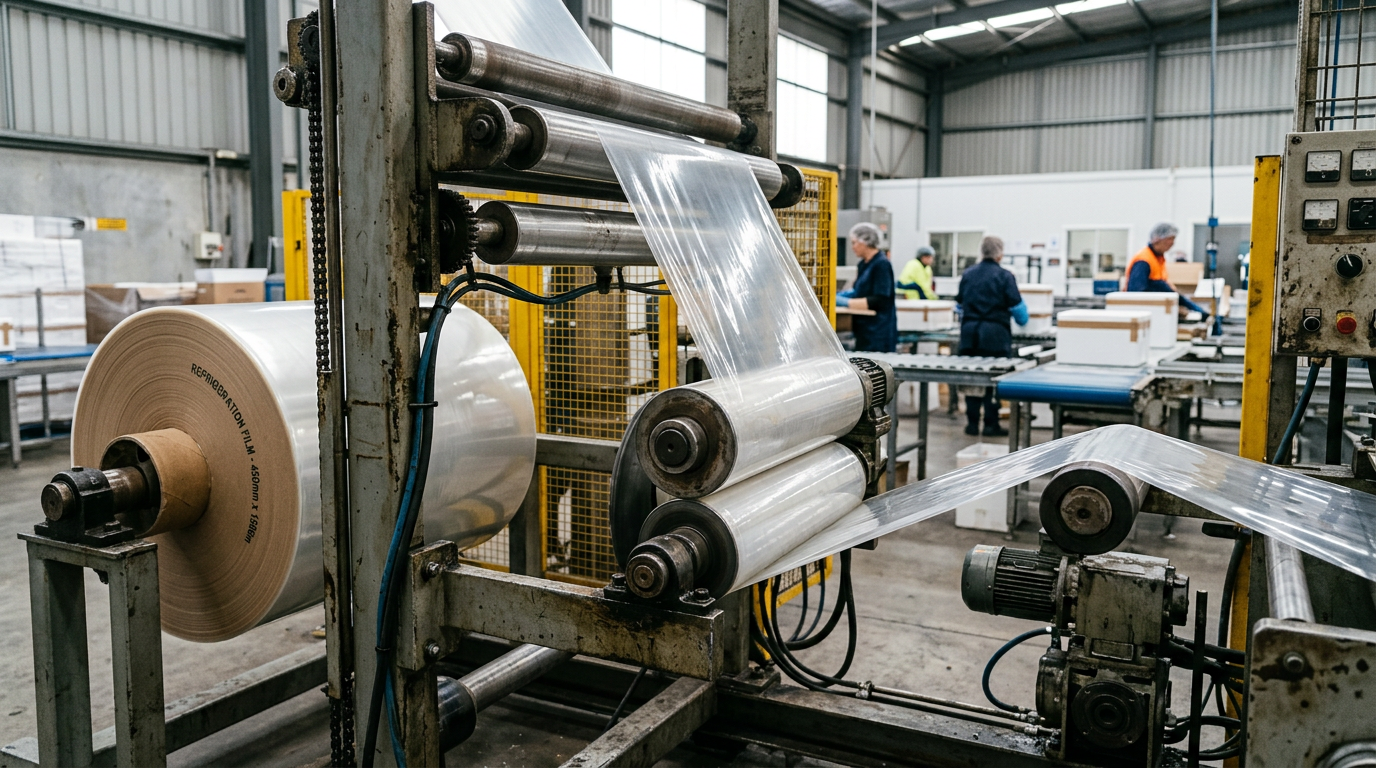
DINP at 50-55 phr delivers a brittleness temperature of approximately -20 to -25°C per industry datasheets — sufficient for indoor refrigeration film, automotive cold-zone interior trim, and most consumer cold-chain packaging. Standard freezer applications operate at -18°C; deep-freeze display film at -25°C; automotive interior cold-zone exposure rarely pushes below -20°C in production specs. DINP covers all of these from a cold-flex standpoint without any adipate-class chain mobility, and at cost-baseline.
Calling DINP’s cold-flex “moderate” only holds against arctic specs. For most cold-chain volume by use-case count, DINP at 50-55 phr is the right answer, not the compromise; and a DOA premium at non-arctic floors pays for brittleness-temperature headroom the application never consumes. DINP took over the high-MW phthalate slot during the post-DEHP regulatory shift and has held it since, with no Annex XIV listing on the horizon — for engineering applications outside toys and childcare mouthing-route exposure, DINP is usable at any phr loading subject only to brand or sector spec preferences.
Where DOA Holds Flex: -40°C to -65°C Service Floors
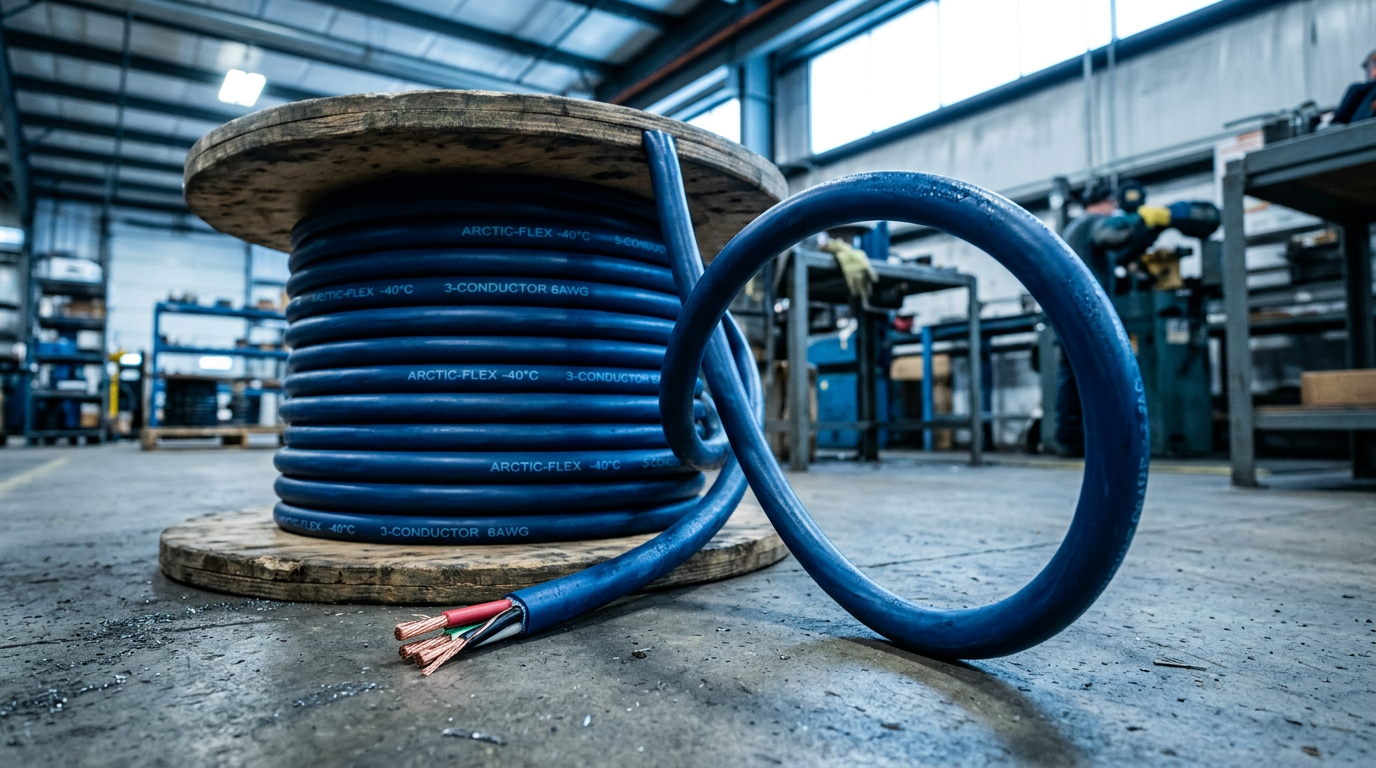
DOA earns its place when the service-temperature floor pushes below -40°C — arctic cable, deep-freeze film, exterior automotive in cold-climate markets — because at 45-50 phr the molecular structure explains why DOA holds a brittleness floor of roughly -55 to -65°C per ASTM D1043, well below where DINP’s aromatic-ring rigidity catches up to it. Concrete evidence the threshold is real and commercially active: Eland Cables’ 318-A Arctic Grade cable per BS 6004 maintains flexibility down to -40°C, rated for refrigerated room installations and external sub-zero environments. SAB Cable’s 2026 release of cold-flexible PVC pushed the same -40°C floor as a freshly approved sheath formulation — standard PVC, by contrast, loses flexibility at -10°C and bursts under bending stress below -30°C.
The application-spec ceiling gets specific in this same band: UL 1063 (machine-tool wire requiring cold-flex performance for plant relocation in winter), MIL-W-5086 (military airframe wire with -55°C operating spec), and freezer-display film in -35°C deep-freeze cabinets all sit inside the DOA-justified zone. Below -40°C, DINP at any phr loading lacks the chain mobility the application demands; the chemistry simply runs out at the phthalate ring’s low-temperature stiffening point. The cold-flex driver that selects DOA at this floor is service-temperature physics, not regulatory pressure — a different decision frame than the DOA-versus-DEHP comparison where REACH Annex XIV authorization carries the call.
The Cold-Flex Application Map
| Service-temperature floor | Typical applications | Plasticizer choice at 50-55 phr |
|---|---|---|
| Above -20°C | General flexible PVC, automotive interior (warm zone), packaging film | DINP cost-baseline; DOA premium unjustified |
| -20°C to -25°C | Indoor refrigeration film, automotive cold-zone trim, consumer cold-chain | DINP at 50-55 phr — meets BT floor with no headroom waste |
| -25°C to -40°C | Outdoor cable in temperate winter climates, light freezer film | DINP/DOA blend (3:1 to 1:1) — graduated cold-flex without DOA-only volatility penalty |
| Below -40°C | Arctic cable (BS 6004 318-A), MIL-W-5086 airframe, deep-freeze display film | DOA primary or DOA/DINP blend (1:1 to 1:3) — chemistry forces the choice |
The map shows why the “DOA versus DINP” framing is too binary for cold-flex spec work. Between -25°C and -40°C the answer is rarely either-or; adipate + phthalate blends in the 3:1 to 1:3 ratio band reach cold-foldability of -70°C and below in the right phr range, which is how arctic-grade cable formulations square the cold-flex requirement against the thermal endurance the cable jacket actually needs. For refrigeration-film and PVC sheet applications generally, the formulation question shifts from “DOA or DINP” to “how much DOA, blended with what.”
Bottom Line
The cold-flex decision lives at the brittleness temperature line, not at the price line. DINP at 50-55 phr handles every service floor at -25°C or warmer; DOA chemistry is required below -40°C; the band in between is blend territory, sized to the actual ASTM D1043 BT the application demands. Reading “cold-resistant” off a datasheet without anchoring to a service-temperature floor in degrees C is how DOA gets specified into projects that don’t need its headroom and DINP gets ruled out of projects it would cover at cost-baseline. The number on the spec sheet that decides this is BT, and the layer below — phr loading, blend ratio, co-stabilizer — is where the cold-flex floor either materializes or evaporates in real PVC compound.