

Here’s what most people don’t realize: somewhere inside your car’s electrical harness, in your phone charger cable, or in the insulation of your home’s wiring is a chemical that’s working hard to keep things from melting, cracking, or failing. That chemical is often TINTM—trioctyl trimellitate.
Most of us never think about plasticizers. We just expect our devices to work reliably in heat, cold, and stress. But the difference between a cable that fails after two years and one that lasts fifteen? That’s often the plasticizer.
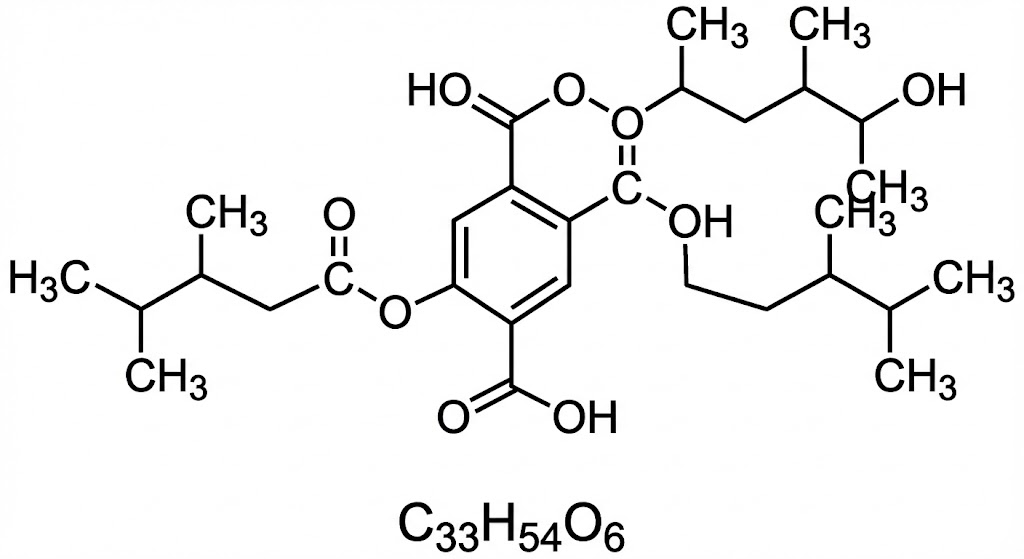
Understanding the Basics: What is TINTM?
TINTM stands for triisononyl trimellitate. That mouthful of a name tells you something important: this isn’t a simple chemical. It’s a specialty plasticizer engineered for demanding applications where standard options just don’t cut it.
At its core, TINTM is an ester compound—a molecule with a specific chemical structure that lets it slip between polymer chains and unlock flexibility. The chemical formula is built around a trimellitic acid core with three branched nonyl alcohol side chains attached. This specific architecture is what gives TINTM its remarkable properties.
Think of TINTM as an oily liquid—colorless to pale yellow, with a mild odor. If you poured some into your hand, it would feel like a thick oil, slick and smooth. It’s practically insoluble in water, which matters enormously for applications like wire insulation and medical devices. That water resistance means TINTM stays put and doesn’t wash away.
Key Characteristics and Performance Advantages
Let’s put numbers to what makes TINTM unique. Here’s how TINTM stacks up against its main competitors:
| Property | TINTM | TOTM (Trioctyl Trimellitate) | DOP (Dioctyl Phthalate) |
|---|---|---|---|
| Molecular Weight | ~519 g/mol | ~391 g/mol | ~390 g/mol |
| Volatility | Extremely Low | Very Low | Low to Moderate |
| Max Temperature Rating | 130°C | 105°C | 60-70°C |
| Extraction Resistance | Superior | Excellent | Poor |
| Oven-Aged Elongation Retention | 90°C and 105°C | Strong | Moderate |
| Heat Stability | Excellent | Excellent | Adequate |
| Cost (Relative to DOP) | 3-4x higher | 2-2.5x higher | 1x (baseline) |
| FDA Approval (Food Contact) | Yes | Yes | No (discontinued) |
| Regulatory Status | Approved | Approved | Banned/Restricted |
That cost difference is real, and it’s the first reason manufacturers sometimes hesitate on TINTM. You’ll pay three to four times more per kilogram than you would for DOP. But that extra cost buys you something concrete: performance that justifies the price in demanding applications.
TINTM’s thermal stability is genuinely exceptional. While other plasticizers degrade when exposed to extended heat, TINTM maintains its properties. Testing shows that TINTM formulations retain better elongation (flexibility) after oven aging compared to alternatives. That means your product stays supple and doesn’t become brittle over time.
The chemical resistance matters too. TINTM resists degradation from oils, fuels, and common solvents. In automotive applications where components contact transmission fluid or engine oil, TINTM formulations outperform the field.
Most importantly, TINTM is FDA-approved for food and medical device contact. This approval matters because it means the plasticizer won’t leach chemicals into food, water, or medical environments. This is why medical tubing, blood bags, and food storage films increasingly specify TINTM or similar high-performance plasticizers.
Real-World Applications: Where TINTM Makes a Difference
The theoretical advantages only matter if they solve real problems. So where do we actually see TINTM deployed?
Wire and Cable Insulation
Here’s a scenario that happens millions of times daily: electrical current flows through a wire, generating heat. The insulation around that wire needs to survive that heat without melting or becoming brittle. This is where TINTM becomes essential.
High-temperature wire insulation—the kind used in automotive engine compartments, industrial machinery, and building construction—frequently specifies TINTM as the plasticizer. Why? Because at 105°C, many conventional plasticizers start to fail. TINTM maintains flexibility and electrical insulation properties at this temperature and beyond.

Automotive Interior Components
Step into any modern vehicle and look at the seals, gaskets, trim pieces, and wire harnesses. Many of these incorporate TINTM or similar trimellitate plasticizers.
The automotive environment is harsh on plastics. Temperature swings are extreme. UV exposure occurs through windows. Volatile solvents like gasoline or detergents contact these components. Materials need to maintain flexibility and integrity through years of this abuse.
TINTM solves this through sheer performance. A seal made with TINTM-plasticized PVC won’t harden during a cold morning or get excessively soft in summer heat. It resists the oils and solvents found in vehicle maintenance products.
Medical and Food-Contact Applications
This is where TINTM’s regulatory approval becomes critical. FDA approval for food contact and medical device use opened entire markets that couldn’t use older phthalates.
Medical tubing—the kind used in infusion sets, catheters, and dialysis equipment—frequently uses TINTM-plasticized PVC. The tubing needs to maintain flexibility without leaching chemicals into the bloodstream. TINTM’s low migration profile and FDA approval make it ideal for this.
Food packaging that requires flexibility, like squeeze bottles or flexible containers, can specify TINTM. The approval means there’s no regulatory risk and no chemical contamination concern.
Photograph storage materials also use TINTM-plasticized films. The low volatility and extraction resistance preserve photos without the plasticizer evaporating and degrading image quality.
Choosing TINTM: Practical Considerations for Manufacturers
If you’re evaluating whether to specify TINTM for your application, here’s what matters.
Temperature requirements: If your application needs to perform reliably above 90°C sustained or experiences frequent thermal cycling, TINTM becomes worth serious consideration. Below 80°C continuous operation, more economical alternatives usually suffice.
Durability expectations: If you’re designing for a 15-year lifespan (like automotive electrical components) versus a 2-year lifespan (like consumer packaging), TINTM’s long-term stability becomes more cost-justified.
Regulatory requirements: If FDA approval for food or medical contact is mandatory, TINTM gets specified. There’s no alternative with equivalent regulatory standing.
Extraction environment: If your product will contact oils, detergents, or solvents regularly, TINTM’s extraction resistance becomes critical.
Migration sensitivity: If even tiny amounts of plasticizer migration are unacceptable (medical devices, for example), TINTM’s low migration profile justifies the cost.
The cost-benefit analysis is real though. You’re paying three to four times more per kilogram than commodity plasticizers. A typical formulation might use 30-40 parts per hundred of resin (phr) of plasticizer. For large-volume production, this cost difference scales up quickly.
That said, manufacturers increasingly justify the premium through total cost of ownership. A product that fails in warranty costs far more than higher-quality materials. A cable that maintains flexibility for 15 years instead of degrading after 5 years provides genuine value to customers willing to pay a bit more.
Formulation-wise, TINTM blends well with other plasticizers and PVC stabilizers. Many manufacturers use TINTM in combination with other plasticizers to balance performance and cost. For instance, blending TINTM with a commodity plasticizer might give you 80 percent of TINTM’s performance at a significantly lower price point.
Processing requires attention to temperature. TINTM starts to show thermal stress above 200°C, so processing equipment shouldn’t exceed this. But within normal PVC processing ranges (160-190°C), TINTM handles fine.
Final Takeaway
TINTM is a specialty chemical that solves specific problems exceptionally well. It’s not the right choice for every application—cost usually prevents that. But where durability, thermal performance, and regulatory compliance matter, TINTM delivers.