

TXIB is a clear, colorless liquid ester with relatively low volatility. The flash point sits around 121-128°C, meaning it won’t ignite easily at normal room temperatures but becomes combustible when heated. At room temperature, you’re dealing with a stable chemical that poses minimal fire risk during standard operations.
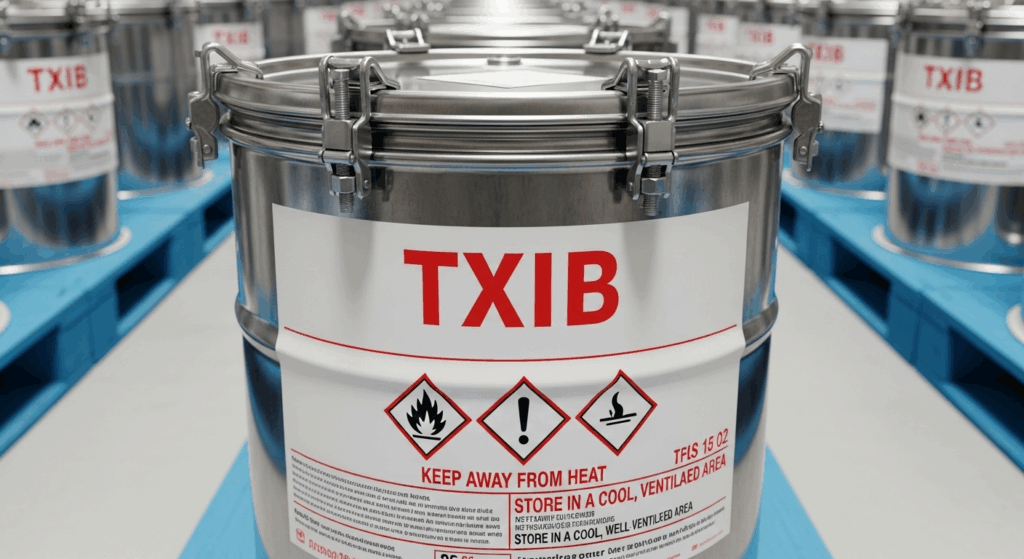
Storage Setup and Requirements
Step 1: Choose Appropriate Storage Location
Store TXIB in a cool, dry, well-ventilated area away from direct heat sources. A controlled room temperature between 5-30°C works well.
Avoid exposure to direct sunlight or temperature extremes—both high and low—as these conditions can degrade the product or cause pressure buildup in containers. A chemical storage room or cabinet with exhaust ventilation is ideal for indoor storage.
Step 2: Select Compatible Containers
Keep TXIB in its original container or transfer it to compatible containers made of steel or HDPE plastic. Don’t use containers that might react with or be weakened by organic solvents.
Large-volume storage in drums or IBC tanks should have secure closures. Place these containers in spill trays or bunded areas to catch leaks.
Step 3: Maintain Proper Temperature
Monitor storage temperatures to stay within the recommended 5-30°C range. Temperature control prevents product degradation and maintains container integrity.
If your facility experiences temperature fluctuations, install climate control or move TXIB storage to a more stable environment.
Step 4: Ensure Adequate Ventilation in Storage Area
Good ventilation prevents any slow accumulation of vapors, especially in warm conditions or if a leak occurs. Even with low vapor pressure, proper airflow is a basic safety measure.
Install exhaust fans if storing indoors, or ensure natural ventilation is sufficient for your storage volume.
Step 5: Segregate From Incompatible Materials
Store TXIB away from strong oxidizing agents like concentrated peroxides, dichromates, nitrates, chlorine, or bleach. Keep it separate from reactive acids and bases as well.
Strong oxidizers could react vigorously with TXIB, creating fire or explosion hazards. Strong acids or bases can cause hydrolysis, generating heat and unwanted byproducts. Use separate storage cabinets or well-separated areas for these incompatible materials.
Step 6: Implement Clear Labeling and Security Measures
Label all containers as “TXIB – 2,2,4-Trimethyl-1,3-pentanediol diisobutyrate” along with any hazard warnings. Post “No Open Flames” signage in the storage area.
Keep the area secure and clearly marked. Regularly inspect containers for signs of leakage or damage and address issues immediately.
Step 7: Set Up Secondary Containment
For large-volume storage, use secondary containment like spill trays or bunded areas. These catch leaks before they spread, protecting your facility and the environment.
Secondary containment should hold at least 10% of the total container volume or 110% of the largest container, whichever is greater.
Emergency Response – Spill Cleanup
Step 1: Evacuate and Secure Area; Ensure Ventilation
Keep unprotected or non-essential personnel away from the spill area. If the spill is significant, evacuate the immediate vicinity and open windows or use exhaust fans to disperse vapors.
Eliminate all ignition sources—turn off equipment, prohibit smoking, and remove spark-producing tools.
Step 2: Put On Appropriate PPE Before Approaching Spill
Don chemical-resistant gloves, safety goggles or face shield, and appropriate clothing before addressing the spill. If the spill is large or in an enclosed space, wear respiratory protection to avoid inhaling concentrated vapors.
Never approach a chemical spill without proper protection.
Step 3: Contain the Spill
Prevent spilled TXIB from spreading or entering drains and waterways. Use absorbent barriers or booms to dike the spill.
Do not let TXIB enter sewers or public water systems—even a moderate spill can cause environmental harm. If the spill reaches a waterway, notify environmental authorities as required by local regulations.
Step 4: Absorb Liquid With Inert Material
Soak up the liquid using dry sand, earth, silica gel, clay, or commercial absorbent pads. Work from the outside of the spill inward to gradually contain it without causing splashes.
Use non-sparking tools for cleanup. Once absorbed, the spill is much easier to handle safely.
Step 5: Collect Contaminated Material Into Sealed, Labeled Containers
Place the contaminated absorbent into suitable containers like labeled drums or heavy-duty plastic bags. Seal containers immediately to prevent vapor escape.
Use appropriate container materials that won’t react with TXIB.
Step 6: Dispose as Chemical Waste Per Local Regulations
Treat collected spill waste as chemical waste—never flush it into drains or surface water. Contact a licensed chemical waste disposal contractor for pickup.
Follow all local environmental regulations for hazardous waste disposal. Complete any required documentation or incident reports.
Step 7: Clean Area With Water and Detergent
After removing contaminated materials, wash the spill area with water and mild detergent to eliminate residues. Provide ventilation until the area is completely dry.
Final cleaning step ensures no TXIB remains that could cause future exposure or contamination issues.