

One additive in a flexible PVC recipe both softens the compound and neutralizes the hydrogen chloride that degrades it during hot processing. Epoxidized soybean oil — ESBO on most spec sheets — does this at just 1-5 phr, working beside a primary plasticizer rather than replacing it.
The molecular structure explains why: epoxidation converts soybean oil’s double bonds into oxirane rings, and those rings both space out polymer chains and consume acid. A grade’s epoxy oxygen content, typically 6.0-6.9%, decides how well it does either job — and it is the number a buyer should read before the bio-based label.
What Is ESBO and How Does It Differ from Soybean Oil?
Epoxidized soybean oil (ESBO) is a light-yellow, viscous liquid produced by converting the carbon-carbon double bonds in soybean oil into oxirane rings — three-membered epoxide groups carrying a reactive oxygen atom. Plain soybean oil has no epoxide groups, so it cannot bind the hydrogen chloride that degrading PVC releases; the epoxidation step creates the working chemistry.
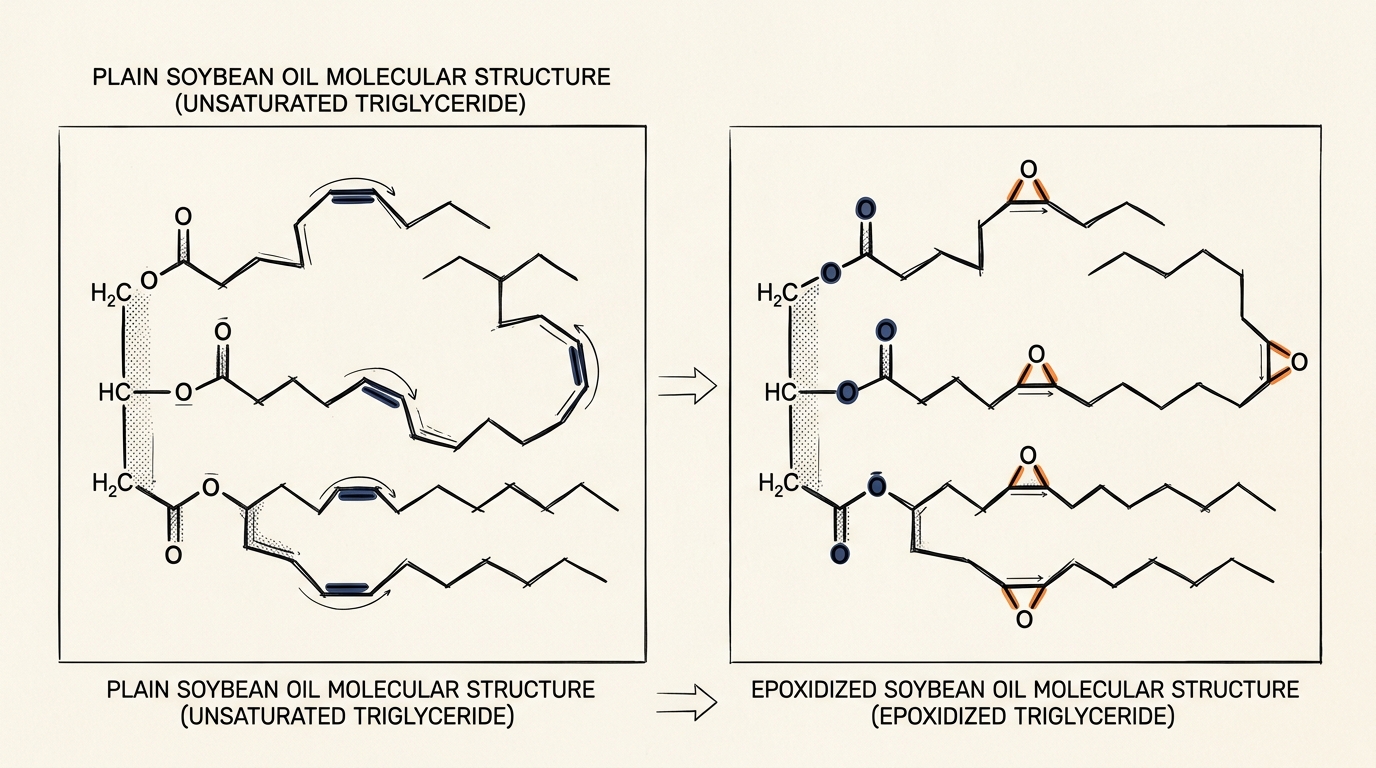
Commercial material carries 6.0-7.0% oxirane oxygen and averages 950-1,050 g/mol, with a density of 0.994 g/cm³ and a flash point of 227 °C. It is registered under CAS 8013-07-8 and appears on supplier documents as either ESBO or ESO.
Among bio-based plasticizers, ESBO is the volume leader: the feedstock is abundant, and the epoxide rings add acid-scavenging function that conventional phthalate esters lack.
How ESBO Works as a Secondary Plasticizer
ESBO softens PVC at roughly half the rate of DOP — about 1.5 °C of Vicat softening-point drop per phr, against 3.5 °C for DOP. That gap is why it runs at 1-5 phr as a secondary plasticizer beside a primary such as DOP or DOTP; 3-5 phr is the practical starting window for most flexible compounds.
At those low loadings it still earns its keep in processing:
- Lower melt viscosity and a smooth rolling bank on calenders
- Retention in service — it resists both volatility loss and soap-and-water extraction
- Protection against antiplasticization, the stiffening DOP alone can cause at additions around 5 phr
The compatibility between plasticizer and polymer sets the upper limit. Karmalm and co-workers reported in 2009 that PVC plasticized with roughly 50 phr ESBO softened acceptably but exuded into sticky surfaces after extended UV exposure, with incomplete epoxidation the suspected cause.
Hold ESBO inside the secondary window and compatibility never becomes the constraint.
Why ESBO Also Acts as a Co-Stabilizer in PVC
ESBO acts as a co-stabilizer because its oxirane rings chemically consume the hydrogen chloride that PVC releases as it begins to degrade during hot processing. Each molecule of free HCl catalyzes the next round of degradation, so an acid scavenger interrupts the chain before discoloration takes hold.
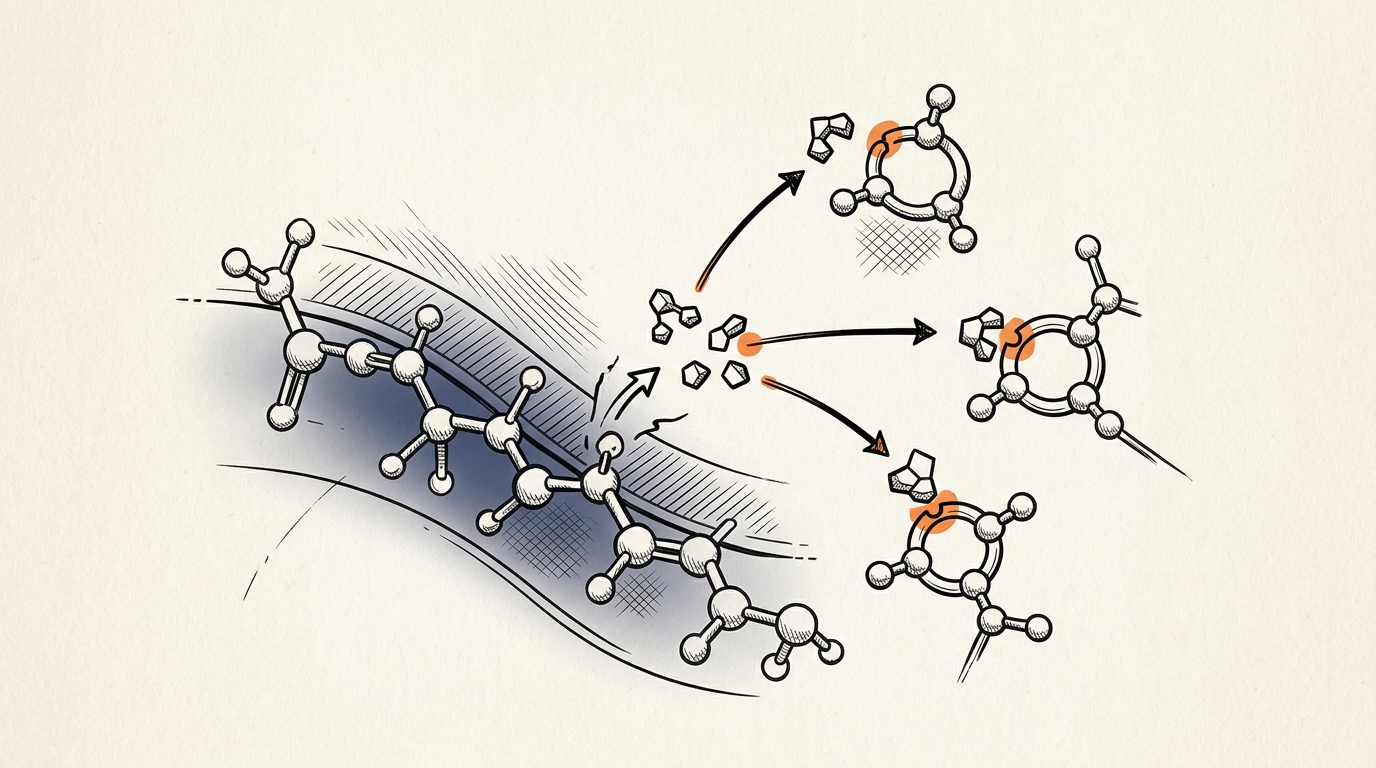
The scavenging runs through three routes:
- Direct binding of HCl as the epoxide ring opens
- Substitution of labile allylic chlorines on the PVC chain — the weak points where degradation starts
- Complexation of zinc chloride, blocking the catalytic effect ZnCl₂ otherwise has in Ca/Zn-stabilized compounds
Ring-opening also leaves hydroxyl groups that keep scavenging HCl, so the protection persists deep into a processing run.
In dehydrochlorination testing published by Putrawan and co-workers in Heliyon in 2023, unstabilized PVC held out for 5.6 minutes and 5 phr of Ca/Zn stearate stretched that to 17.8 minutes. Adding a single phr of epoxidized oil nearly doubled the induction time again, and 1-4 phr bought 10 to 30 extra minutes on a roll mill at 190 °C.
That is why I count ESBO on the stabilizer side of the formulation ledger first: stabilizers and plasticizers work together in every flexible compound, and ESBO is the one additive that sits on both sides.
Where ESBO Is Used in Flexible PVC
ESBO concentrates in food-contact flexible PVC — the applications that demand low volatility and a documented regulatory position:
- Gasket seals in metal lug caps for glass food jars — its single most scrutinized application
- Cling film and food-packaging films
- Flexible medical PVC and other soft goods where a non-phthalate secondary is specified
The lid gasket is where the food-contact credential got stress-tested. A 2005 Swiss survey found ESBO migrating into oily foods at up to 1,170 mg/kg from lid gaskets. The EU answered with specific migration limits under Regulation 10/2011: 60 mg/kg for general food contact, tightened to 30 mg/kg for gaskets sealing infant formula and baby food.
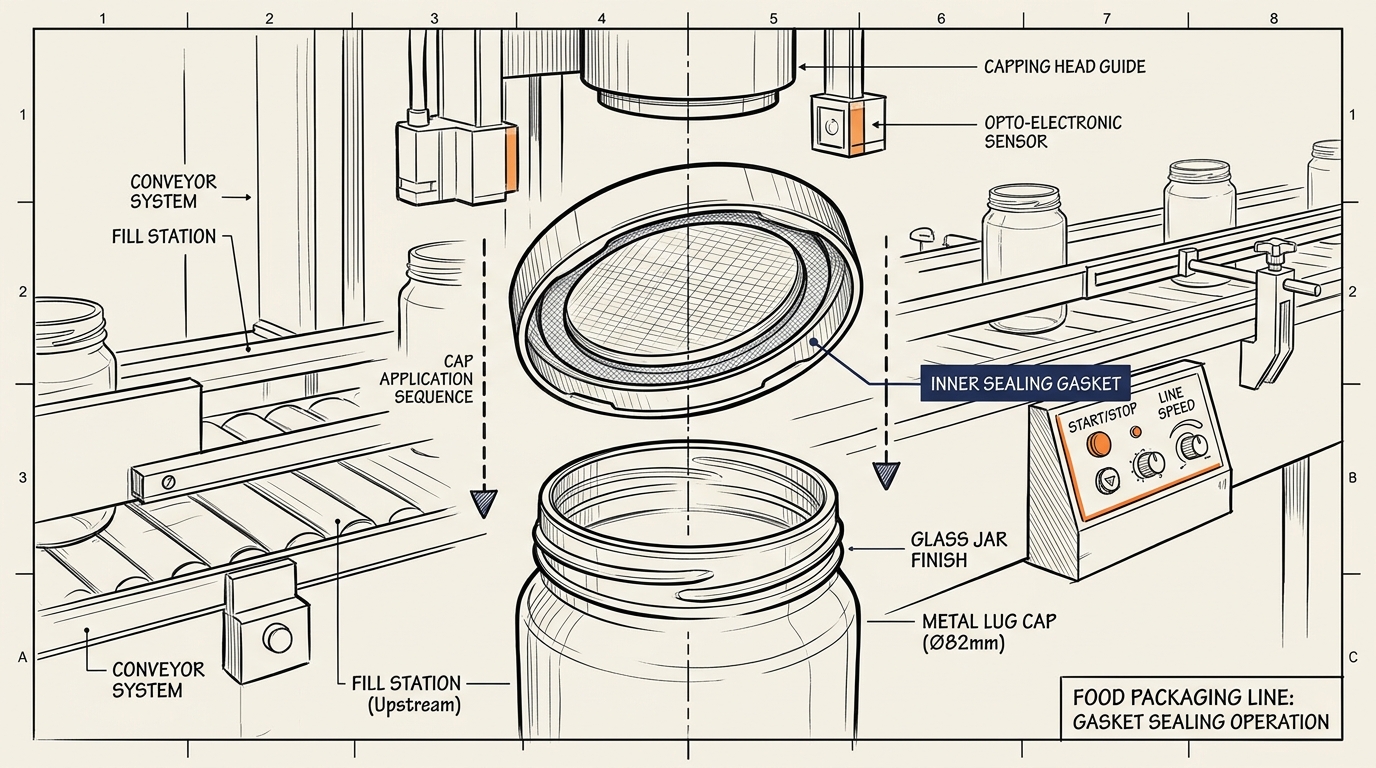
Migration rate depends on the fat content of the food and the gasket’s plasticizer loading, which is why oily products set the worst case.
Whether ESBO is “safe” for food contact is therefore a compliance question, not a label question. Ask the supplier for migration-compliance documentation per grade; a blanket food-safe claim covers nothing.
What to Check on an ESBO COA
Five numbers on a certificate of analysis predict how an ESBO grade will behave in a compound: epoxy oxygen content (also written as oxirane oxygen), iodine value, acid value, color, and viscosity.
| Parameter | Typical commercial spec | What it predicts |
|---|---|---|
| Epoxy (oxirane) oxygen | 6.0-6.9%; premium grades 6.5 ± 0.1% | HCl-scavenging capacity of the grade |
| Iodine value | ≤5 g I₂/100 g; ≤3 on premium specs | How completely the double bonds converted to rings |
| Acid value | ≤0.5 mg KOH/g | Residual acidity, which works against stabilization |
| Color | ≤150 Pt-Co | Degree of refining; clarity in clear compounds |
| Viscosity | ~325 mPa·s at 25 °C | Metering and pumping behavior in the plant |
Between two otherwise similar grades, take the higher oxirane content and the lower iodine value — more rings formed and fewer double bonds left behind means more scavenging work per kilogram.
Chasing oxirane content across oil types backfires, though. Epoxidized linseed oil reaches 8.2% oxirane oxygen, yet its higher polarity risks compatibility trouble on aging and its low-temperature flexibility is poor. The bigger number does not make the better grade.
ESBO also starts to solidify around 10 °C, so winter storage tanks and transfer lines need mild heating that conventional plasticizers rarely call for.
Bastone’s ESO grade, for example, publishes epoxy oxygen content and purity on its specification — the numbers that let a buyer confirm co-stabilizer capacity before committing to a truckload.
What Most Buyers Get Wrong About ESBO
The most common mistake I see is buying ESBO as a drop-in bio-based softener — comparing grades on price per ton, then wondering why heat stability shifts between shipments. The commercial value sits in the co-stabilizer chemistry, and that chemistry is written in two COA numbers: oxirane oxygen content and iodine value.
Specify those two numbers, hold the dose inside the secondary window, and treat food-contact suitability as per-grade migration compliance rather than a property of the molecule. Do that, and the softening — the reason most people think they are buying ESBO — takes care of itself.